

Dota 2 Tournament Guide: How Pro Events Really Work
A Dota 2 tournament is a different beast from your ranked ladder grind. The pacing is slower, the drafts are tighter, and a single stolen Aegis can swing a seven-figure prize pool. If you want to actually understand what you are watching, or you are thinking about climbing toward amateur circuits yourself, this guide breaks down the real structure of competitive Dota.
We will cover formats, qualification paths, the draft phase, and the in-game habits that make pro matches look so different from your average pub.
How a Dota 2 Tournament Is Structured
Most top-level Dota events share a familiar shape. Teams qualify through regional brackets, play a group stage to seed, then fight through a double-elimination playoff bracket.
The double-elimination format is the backbone of competitive Dota. Lose once and you drop to the lower bracket, where every series is an elimination. Lose twice and you go home.
Here is the typical pipeline:
| Stage | Common Format | Purpose |
|---|---|---|
| Open Qualifiers | Single elimination, Bo1/Bo3 | Thin the field of amateur stacks |
| Closed Qualifiers | Double elimination, Bo3 | Decide regional representatives |
| Group Stage | Round robin, Bo2 | Seed teams for playoffs |
| Playoffs | Double elimination, Bo3/Bo5 | Determine the champion |
| Grand Final | Bo5, usually with upper-bracket advantage | Crown the winner |
The International (TI) is the sport’s crown jewel, run by Valve, and historically features the largest prize pool in esports. The Dota Pro Circuit (DPC) has in the past been the structured path toward TI, though Valve has reshaped the competitive calendar more than once. Check official Valve announcements for the current competitive structure, since this is the kind of thing that changes between years.
Qualification Paths: From Pub Star to Pro Stage
Nobody starts on the main stage. The road usually looks like this:
- Climb the ranked ladder. High Immortal MMR is table stakes for a tryout.
- Join an amateur stack. Scrim partners and third-party leagues give you reps against real five-man coordination.
- Place in open qualifiers. This is where unknown rosters get noticed.
- Earn a spot in closed qualifiers. Established orgs scout here.
- Sign with an organization. Salary, bootcamp, coaching, scrim schedules.
If you are still building the ladder foundation, our dota 2 mmr guide covers how matchmaking actually calculates your rating, and the dota 2 ranks guide explains where Immortal sits relative to everyone else.
The Draft Is Half the Match
In a pub, you pick a hero you like. In a tournament, the draft is a 10-minute chess match where coaches, captains, and analysts try to force opponents into uncomfortable lanes before the game even starts.
How Captain’s Mode Works
Captain’s Mode is the standard competitive draft. It alternates bans and picks across multiple phases:
- Each team bans heroes they want to remove from the pool.
- Teams alternate picking from the remaining heroes.
- First pick typically goes to the higher-seeded or coin-flip winner.
The specific number of bans per phase has shifted across patches, so check the in-game client for the current ban structure.
What Captains Are Actually Thinking About
- Lane matchups. Can our offlaner survive their safe lane two-core setup?
- Power spikes. When does each hero come online, and do our timings align?
- Flex picks. A hero that can play two or three positions hides your lineup.
- Counter-picks. Last pick is gold for shutting down a committed enemy core.
If drafting fascinates you, start by learning which heroes tend to anchor pro drafts in our dota 2 hero tier list and which cores dominate farm in the dota 2 best carry heroes breakdown.
In-Game Habits That Separate Pros from Pubs
Watching a pro match for the first time can feel slow. That is because every movement has a reason. Here are the habits that stand out most.
Vision Is Non-Negotiable
Pro supports place and rotate wards constantly. Observer wards guard key routes; sentries deward enemy vision and expose invisible heroes. The vision war decides where teamfights happen.
Our dota 2 warding guide walks through the principles, and the dota 2 warding spots breakdown covers the specific placements pros reuse every game.
Lane Discipline
Position 1 and 5 players rarely over-commit in the first five minutes. Last-hitting, deny counts, and pull timings matter more than kills. If you want cleaner laning, the dota 2 laning guide and dota 2 support guide go deep on the fundamentals.
Objective Timers
Pros play around Roshan like clockwork. The team that controls Roshan vision controls the pace of the mid-to-late game. Aegis of the Immortal is often worth more than a kill because it rewrites teamfight math.
Learn the pit, the respawn window, and the pull tricks in our dota 2 roshan guide. And when the enemy is throwing bodies at your base, the dota 2 backdoor protection explainer covers how pros push high ground without feeding the mechanic.
Farm Patterns and Neutral Items
Position 1 and 2 cores stack camps, flash farm with items like Battle Fury or Maelstrom, and rotate between lanes and the jungle in tight loops. Neutral items from tier two onward can swing fights.
- The dota 2 farming guide covers efficient lane-to-jungle loops.
- The dota 2 neutral items guide breaks down what each tier offers.
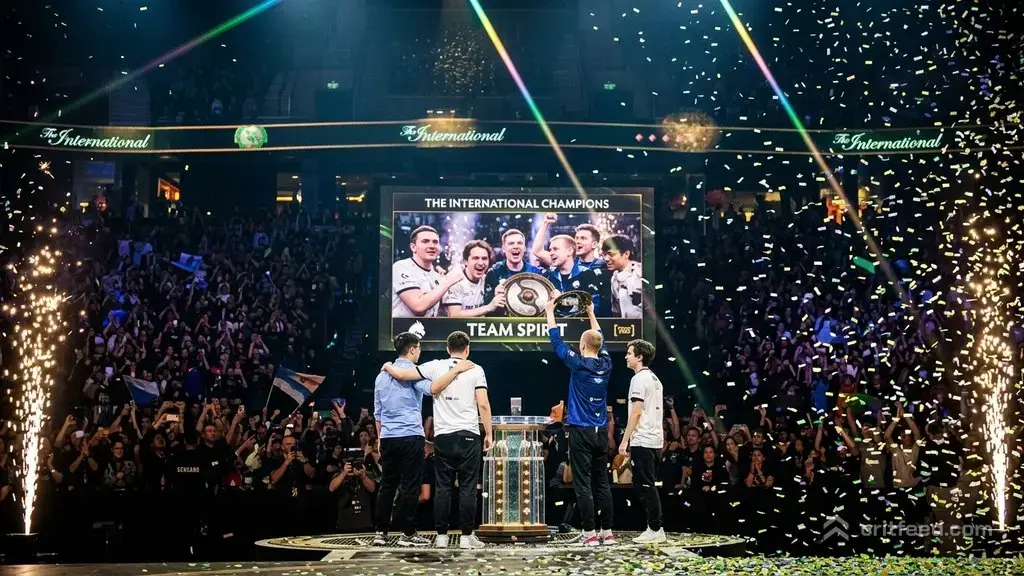
How to Watch a Dota 2 Tournament Like a Pro
If you want to get more out of broadcasts, try this:
- Watch the minimap, not the fight. Rotations tell you what will happen 30 seconds from now.
- Track the net worth graph. It explains why one team keeps forcing fights.
- Note the ban targets. First bans reveal what each team fears most.
- Follow one player per game. Watching five heroes at once teaches you nothing. Pick a position and study their decisions.
The Bottom Line
A Dota 2 tournament rewards preparation, vision control, and draft discipline far more than mechanical flash. The teams that win are usually the ones making the fewest avoidable mistakes, not the ones pulling off the highlights.
If you want to translate any of this into your own games, pick one habit at a time: better warding, cleaner last-hitting, or a sharper read on Roshan timings. Pros did not learn everything at once, and neither will you.