
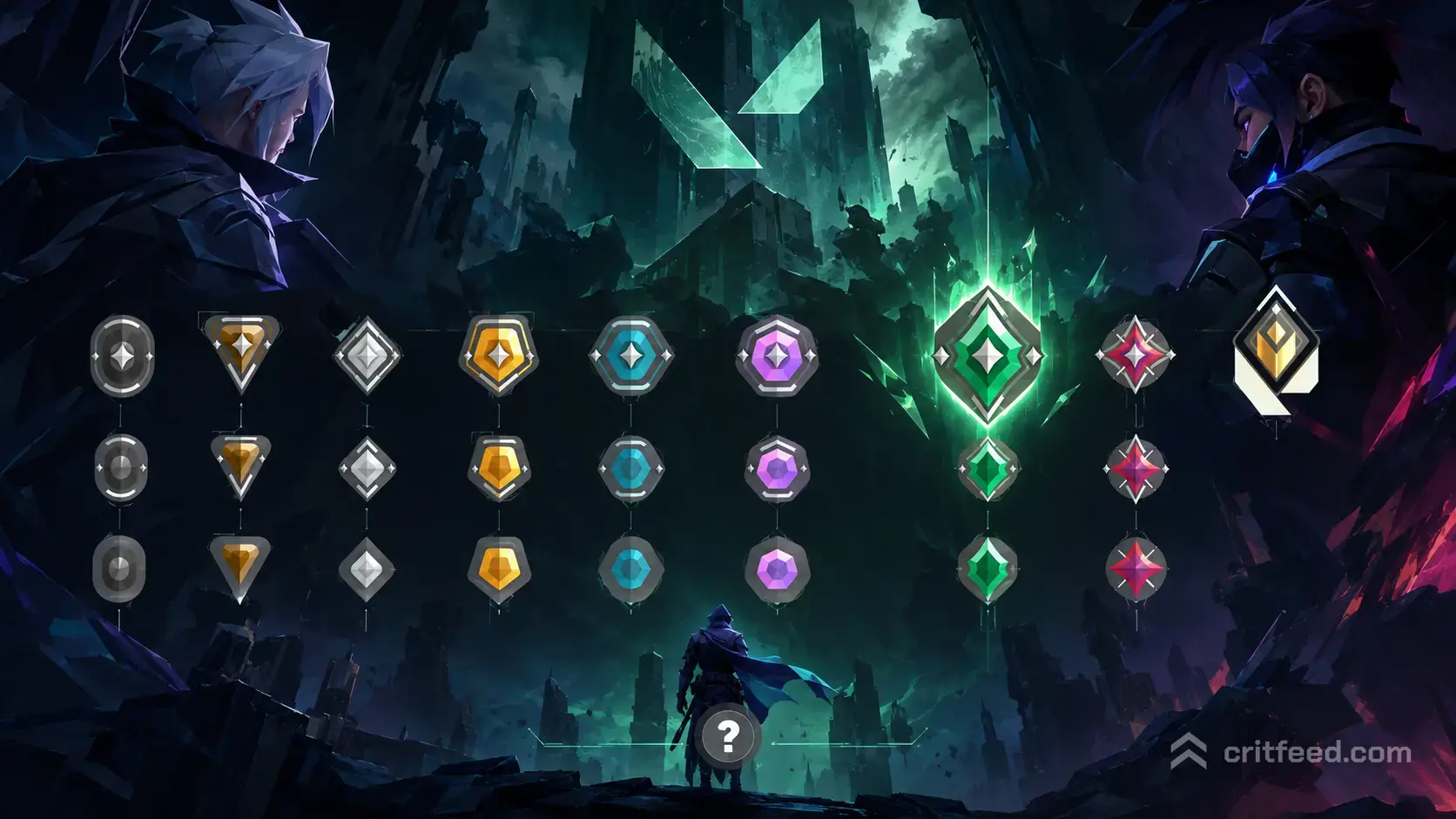
If you’ve ever asked when was Ascendant added to Valorant, the short answer is: it arrived with Patch 5.0, which kicked off Episode 5, Act 1. Riot squeezed the new tier between Diamond and Immortal to fix a ranked bottleneck that had been squeezing high-level players for over a year. Here’s how it happened, why it happened, and what it changed for the ladder.
The Short Answer: Patch 5.0, Episode 5 Act 1
Ascendant went live alongside the launch of Episode 5, Act 1 in Patch 5.0. It was introduced as a brand-new competitive rank sitting between Diamond 3 and Immortal 1, giving high-Diamond players a real progression step instead of a wall.
Like every other main rank in the game, Ascendant is split into three sub-tiers:
- Ascendant 1
- Ascendant 2
- Ascendant 3
Above it sits Immortal, then Radiant at the top. Below it, the familiar Iron through Diamond ladder is unchanged in structure.
Why Riot Added Ascendant
Before Ascendant existed, the jump from Diamond into Immortal was brutal. Immortal had ballooned in population, and matchmaking often stuffed high-Diamond players into lobbies against Radiant-adjacent smurfs. Riot’s stated goal with the new rank was to spread out the top of the ladder so games felt fairer at every step.
The idea was simple:
- Give Diamond players a real next step without dumping them straight into Immortal.
- Trim Immortal’s population so it becomes a genuine mark of top-tier play again.
- Tighten skill gaps in matchmaking, especially in high-elo lobbies where duo restrictions bite.
If you want to know how those lobbies get built in the first place, our guide on how Valorant matchmaking works breaks the system down.
How Ascendant Reshaped the Rank Distribution
Adding a whole new tier didn’t just add a badge, it forced a shuffle across the entire top half of the ladder. Players who had been comfortably Immortal 1 or 2 largely landed in the new Ascendant range, and everyone in Diamond and Platinum saw their placement matches recalibrate around the new curve.
Here’s how the top of the competitive ladder is structured after Ascendant was introduced:
| Rank | Position |
|---|---|
| Radiant | Top of the ladder (top players per region) |
| Immortal 1-3 | Elite tier below Radiant |
| Ascendant 1-3 | New tier, between Diamond and Immortal |
| Diamond 1-3 | High-skill tier |
| Platinum 1-3 | Above-average tier |
The knock-on effect: a lot of players who thought of themselves as “Immortal players” ended up Ascendant on the new scale. That isn’t a demotion in skill, it’s the same skill level with a more accurate label.
For a deeper dive into what actually moves your rank up and down, check our explainer on how Valorant MMR works.
What Changed With Ascendant Beyond the Icon
The launch of Ascendant came bundled with several ranked system tweaks in Patch 5.0. The big-picture changes worth knowing:
- Group restrictions: Players in Ascendant and above face stricter duo/party limits in Competitive, similar to Immortal and Radiant. High-elo solo queue stays cleaner because of it.
- Rank badge and border: A new visual identity, distinct from Diamond and Immortal, so you can actually tell tiers apart on the scoreboard.
- Placement recalibration: When Episode 5 Act 1 rolled out, everyone’s placement matches used the new scale, which is why some Immortals “dropped” to Ascendant on day one.
If you’re curious about the current ranked queue rules at the top end, our breakdown of Valorant queue restrictions is a useful companion read.
Ascendant in Competitive vs Premier
Ascendant exists in the main Competitive queue. Premier, Riot’s team-based competitive mode, uses its own division system (Contender, Challenger, Elite, and so on) and does not use the Iron-to-Radiant ladder. If you climb in Premier, you’re climbing a separate track, though your Competitive rank still lives on your career page.
Is Ascendant “Good”? Where It Sits in the Big Picture
Ascendant is genuinely high-level. It’s the tier where:
- Utility usage matters more than raw aim. Bad flashes and wasted smokes get punished every round.
- Economy discipline is expected. Force-buying on the wrong round loses the game, not just the round. Our guide on Valorant tips and tricks covers the fundamentals that stop being optional here.
- Agent flex is normal. Solo-role mains hit a ceiling; teams expect you to swap.
Reaching Ascendant puts you comfortably in the upper slice of the global player base. Immortal and Radiant are still above it, but Ascendant is where the game stops forgiving sloppy fundamentals.
The Bottom Line
Ascendant was added to Valorant in Patch 5.0, at the start of Episode 5, Act 1. It sits between Diamond 3 and Immortal 1, it’s split into three sub-tiers, and it was introduced to relieve pressure on Immortal and give high-Diamond players a real progression path. Everything else about the ladder, from Iron up through Radiant, kept its familiar structure.
If you’re grinding toward Ascendant right now, keep an eye on the latest Valorant patch notes for any ranked system tweaks each act. Small changes to RR gains, party restrictions, or placement math can shift climb pace more than you’d think.