
Round Bonus Valorant: Master the Economy’s Trickiest Round
The round bonus in Valorant is the swing round that quietly decides most maps. Win it and your economy snowballs for three rounds. Lose it and you are stuck on half-buys while the enemy stacks shields. This guide breaks down what the round bonus actually is, how the loss streak math works, and the exact calls Tier 1 teams make when it hits.
What Is the Round Bonus in Valorant?
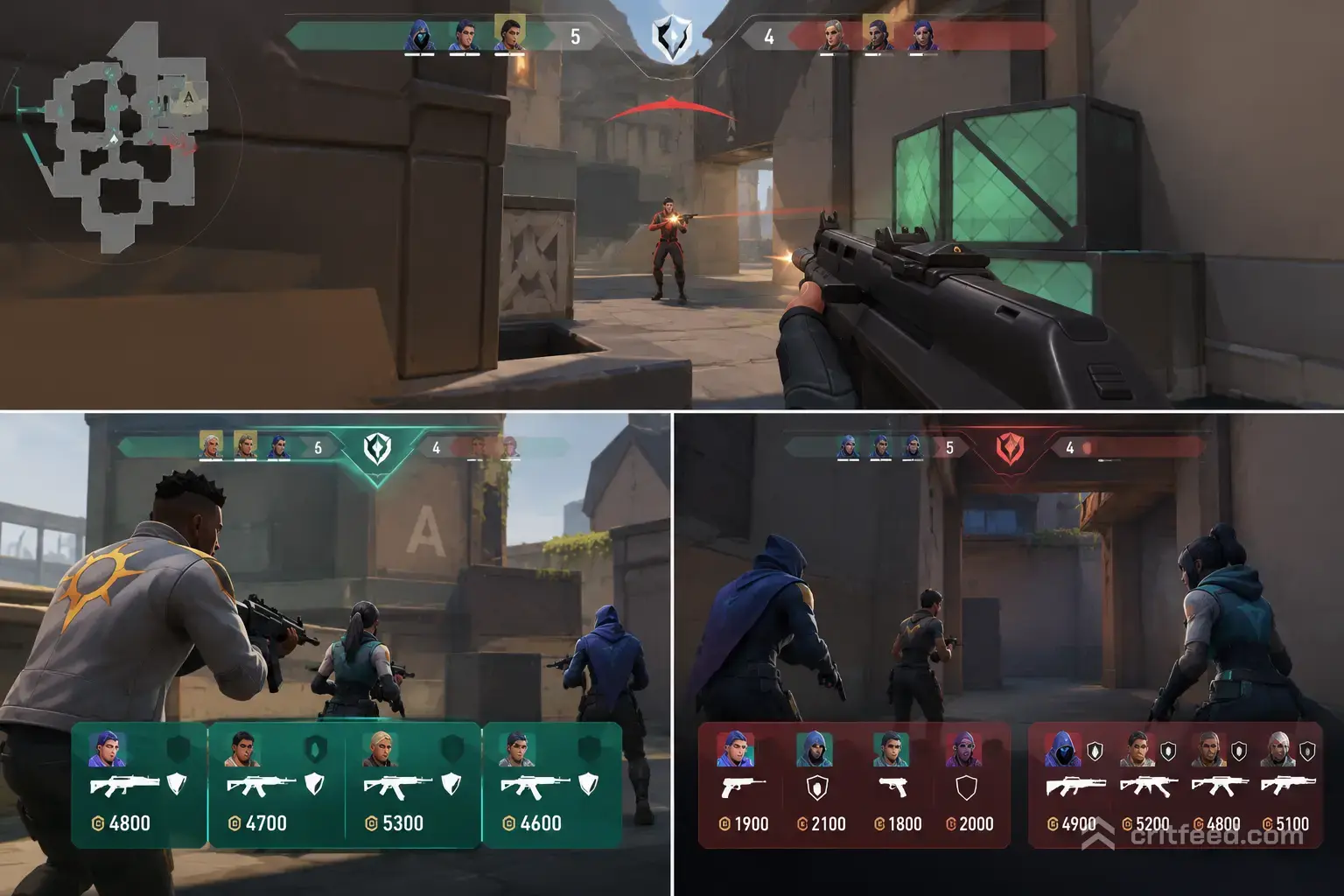
The round bonus (sometimes called the “second round” or “bonus round”) is the round immediately after the pistol round. Whoever wins the pistol enters the bonus round with full kill credits, a plant or defuse bonus, and a win reward on top of the next round’s base income. Whoever loses the pistol enters with a loss bonus and almost nothing else.
In short, the pistol winners have enough to buy real guns. The pistol losers have to decide: save for a full buy in round three, or spend everything now to steal the bonus.
Why it matters: winning the bonus swings the economy by roughly 5,000 credits per player over the next two rounds. That is the gap between a Phantom and a Spectre, between full util and no util.
How the Round Bonus Economy Works
Valorant’s economy is built on two numbers you need to memorize: the loss bonus and the kill reward.
| Income Source | Credits |
|---|---|
| Round win | 3,000 |
| First consecutive loss | 1,900 |
| Second consecutive loss | 2,400 |
| Third+ consecutive loss | 2,900 |
| Kill (standard) | 200 |
| Spike plant (team-wide) | 300 |
| Half-round survival carry-over | Weapon kept |
After the pistol round, the winning team usually sits around 3,900 credits per player (3,000 win bonus plus leftover from pistol kills and the plant). The losing team sits closer to 1,900 to 2,400, depending on kills.
The core question of the bonus round: can the pistol losers close that credit gap, or should they bank it?
Pistol Winners: Don’t Autopilot Your Bonus Round
Winning the pistol does not guarantee the bonus. Pistol winners lose the bonus round more often than you would think, usually because they get complacent and buy inconsistently.
Standard Bonus Buy for Winners
- Light shields (400) on everyone, not heavies yet
- Spectre or Bulldog depending on map and role
- One utility piece per player (one smoke, one flash, one recon)
- Save one Classic headshot kill for a teammate if someone is short
Do not buy a Vandal or Phantom on the bonus unless four teammates can also afford one plus shields plus util. A single rifle on a half-buy team is a free pickup for the enemy.
The Trap: Over-Buying Util
A common ranked mistake is dumping credits into every ability charge on the bonus round. You win the round, but you enter round three with 2,100 credits and no shields. That is how pistol winners lose rounds three and four back-to-back and gift the half back.
Pistol Losers: Save, Force, or Full Send?
This is the real decision point in round bonus Valorant strategy. You have three options, and the right one depends on your agent comp, the enemy’s expected buy, and the map.
Option 1: Full Save (Eco)
Everyone buys nothing but a Classic and maybe one ability. Target credits for round three: around 4,200 to 4,700 per player, enough for a near-full buy.
When to save:
- You lost the pistol badly (4-0 or 5-0, no kills banked)
- Your comp needs full util to run a site hit (double-controller setups, Astra, Omen, Viper)
- Enemy is on Attack with a Judge-friendly map like Bind or Split
Option 2: Half Buy (Force)
Each player buys a Sheriff, Spectre, Bulldog, or Stinger with light shields and minimal util. The goal is not to win the round outright but to steal weapons and bank kills.
When to half-buy:
- You banked 2-3 kills on the pistol loss
- You have a strong anti-eco agent (Raze with Boom Bot and Blast Pack, Chamber with Headhunter)
- Enemy is likely to play passive and respect you
Option 3: Full Force Buy
Every player buys Phantom or Vandal plus heavy shields plus key util, draining the account dry. Target: beat the enemy’s bonus buy with better guns.
When to force:
- Enemy only has Spectres and light shields (they can be out-ranged)
- Your team has Operator money for a lurker or flanker
- You are on map point or score point, and losing the half is worse than losing the economy
What the Pros Actually Do: Tier 1 Bonus Round Data
Analysis of Tier 1 Valorant matches shows a clear pattern: the team that wins the bonus round wins the half roughly 70% of the time. That is not a correlation. That is a causal snowball.
Top teams treat the bonus round as the second-most-important round of the half, right behind the pistol. The common Tier 1 habits:
- Attackers who lose the pistol force more often than they save, especially on execute-heavy maps
- Defenders who lose the pistol save more often, trading one round for a reset at round three
- The spike plant is non-negotiable on the bonus round, even in losing positions, because the 300-credit team bonus plus the plant delay can swing round three
The teams that treat the bonus as “just another round” are the teams you see fall behind 2-10 at the half.
Map-by-Map Bonus Round Notes
Bonus round strategy shifts hard depending on the map. If you are still learning the pool, our valorant maps overview covers the full rotation.
Attack-Sided Maps (Bind, Breeze, Pearl)
Pistol-losing attackers should lean toward saving. These maps punish half-buys because defenders can hold long sightlines with Spectres and still trade one-for-one.
Defense-Sided Maps (Split, Fracture, Haven)
Pistol-losing defenders can force more aggressively. Tight angles and short sightlines let Spectres and Judges punch above their weight.
Icebox: The Outlier
Icebox map callouts matter more than economy here. The map’s verticality means a single Operator pick on the bonus round can win the next three rounds regardless of the credit gap. If you can scrape together Op money on a half-buy, do it.
Common Round Bonus Mistakes
These are the ranked habits that cost you the half:
- Random individual buys. One player on Vandal, two on Classic, two on Spectre. The team cannot execute together and gets picked apart.
- Ignoring the mid-round pickup. If you kill an enemy on a bonus round save, pick up their gun. Carrying a Spectre into round three means you only need shields and util.
- Full-saving when you banked kills. If three teammates have 3,200 credits from pistol kills, that is a force, not a save.
- Forcing without a plan. A force buy without a called site hit is just five Spectres walking into crossfires.
- Buying for teammates who refuse to drop back. Dropping a rifle to a teammate who then rushes alone is a wasted economy swing.
For more habits that separate climbers from stagnant players, our valorant tips and tricks guide covers the mental side.
Communication: Call the Bonus Before It Starts
The bonus round is lost in the buy phase, not the gunfight. Before the round starts:
- IGL calls save or force. No debate.
- Every player types their credits in team chat or calls them on comms.
- Drops are assigned. “I drop Phantom to [player]” is a specific call. “Someone drop me” is not.
- Site is called. On a force, you are hitting one site hard. Pick it before you leave spawn.
If your team cannot agree on save versus force, default to save. A clean round three is worth more than a chaotic round two.
The Bonus Round and Overtime Economy
In overtime, every player starts with a fixed credit pool (currently 5,000 per OT round in competitive queue). The traditional bonus round math does not apply, but the lesson does: the team that commits together wins. Mixed buys lose overtime rounds the same way they lose bonus rounds.
If you are new to the ranked system entirely, our valorant beginners guide walks through the full economy from the first round forward.
The Bottom Line
The round bonus in Valorant is where ranked games are quietly decided. Pistol winners who buy consistently extend their lead. Pistol losers who commit to a clear save-or-force plan climb back into the half. The teams that lose it are the ones who freelance their buys and hope.
The one thing most players get wrong: they think the bonus round is about guns. It is about the next two rounds. Buy for round three, not round two, and the half takes care of itself.