
Flank Meaning Valorant: How Flanks Work and Beat Them
If you have ever heard a teammate scream “watch flank!” and had no idea where to look, you are not alone. The flank meaning in Valorant is simple on paper but brutal in practice: it is an attack from behind or from a direction the enemy is not watching. Below, we break down what a flank really is, how to pull one off, and how to stop one from ending your round.
What Does Flank Mean in Valorant?
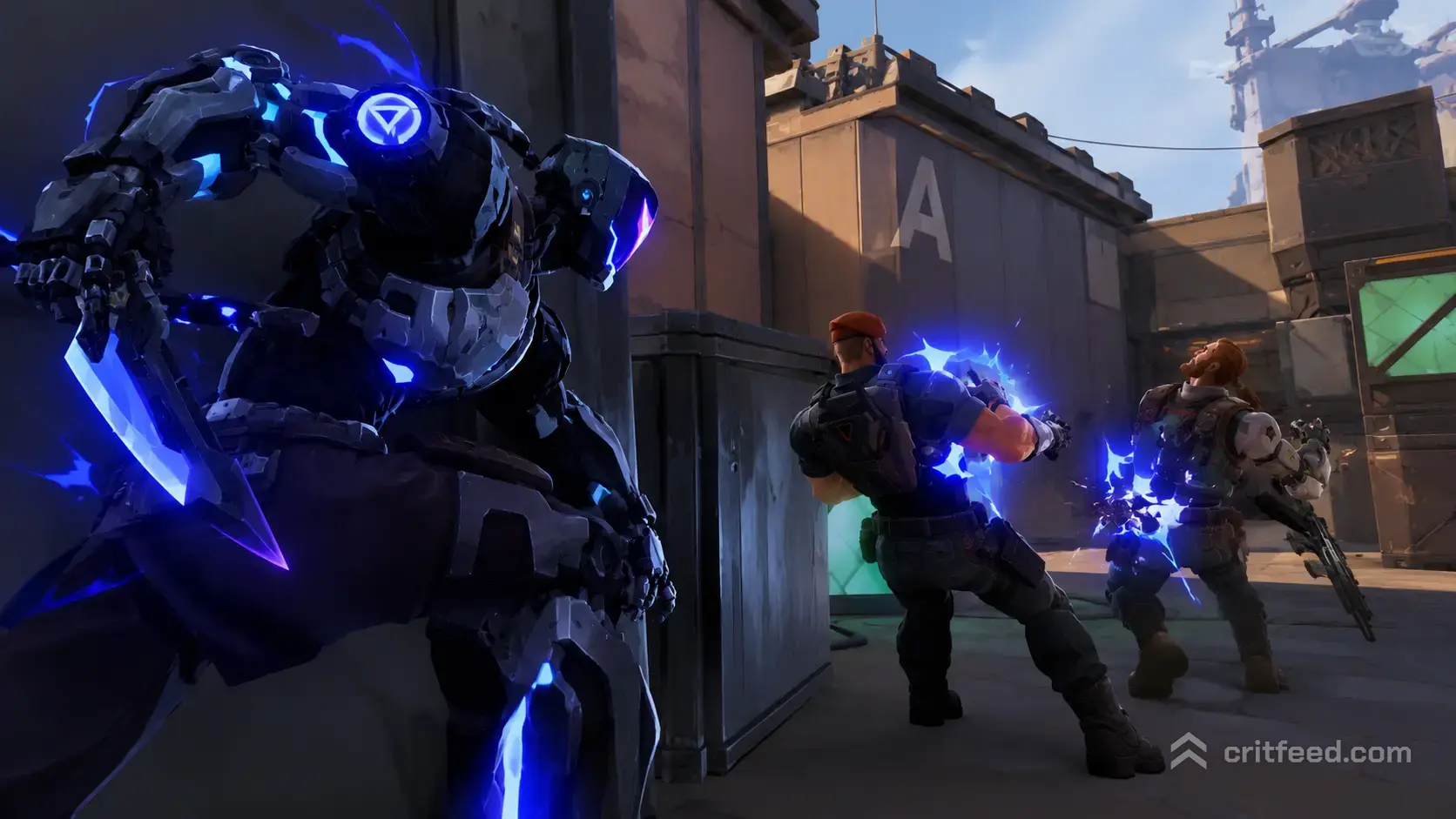
A flank in Valorant is when a player attacks the enemy team from a position they are not covering, usually from behind or from a side angle after the main fight has started.
The key idea is simple: the enemy’s crosshairs are pointed one way, and you shoot them from the other. On attack, this often means one player loops around the map while teammates fake or push the opposite site. On defense, it means a defender rotates behind attackers who have already committed to a site.
Flanking is one of the highest-value plays in the game because it almost always leads to free kills, broken trades, and panicked rotations. It is also one of the hardest things to pull off, since Valorant maps are built with clear choke points and most teams actively watch for it.
Flank vs. Lurk vs. Rotate: Clear the Confusion
New players mix these three up constantly. They are related but not the same.
| Term | What It Means | When It Happens |
|---|---|---|
| Flank | Attacking the enemy from behind or an unwatched angle | During or right after a site hit |
| Lurk | Playing slow and alone on the opposite side of the map | Early to mid round, setting up a flank or map control |
| Rotate | Moving from one site to another based on info | Any point in the round, usually after a contact call |
A lurker often becomes a flanker. A rotation is usually the move that gets flanked. Understanding which word your teammate is using tells you exactly what the round plan is.
How a Flank Works on Attack
A real attack-side flank is a team play, not a solo heroics moment. Here is the structure most coordinated teams use.
1. The Fake
Three or four players make noise at one site. They throw utility, tag walls, maybe pop a smoke. The goal is to pull defenders and their eyes toward that site.
2. The Loop
While the fake happens, the flanker takes the long way around. On a map like Bind, this might mean one player heading through B Long while the rest of the team fakes A. On Haven, it could mean a lurker holding C Long while four hit B.
3. The Collapse
Once the real site hit begins, the flanker pushes into the back of defenders who have already rotated or are watching the main entry. The flanker’s job is to clean up players who are repeeking or planting on the retake.
The best flankers are patient. They do not peek early, they do not reveal themselves on the minimap, and they wait until teammates are actively trading before pulling the trigger. If you are new to the role, our valorant tips and tricks hub has drills that build this patience.
How a Flank Works on Defense
Defensive flanks are more about reads than setups. When attackers commit to a site, a defender from the opposite side can rotate behind them.
The trick is timing. Rotate too early and you give up the opposite site. Rotate too late and the Spike is already down with four players holding angles. The sweet spot is right as the attackers are planting, when their utility is spent and their heads are turned toward the plant.
Smokes agents like Omen and Clove are built for this because they can teleport or re-smoke to reset angles. Duelists like Jett and Raze can dash in, catch two players off guard, and dash out before the trade comes.
How to Spot a Flank Before It Kills You
If you keep dying from behind in ranked, you are not watching the map. These are the tells.
- The minimap has a gap. Count enemies you have seen. If only three or four are accounted for, someone is lurking.
- Spike timer vs. enemy sound. If you are planting A and you hear a door open on B, that is not a ghost. That is a flank.
- Silence after a loud push. When the enemy site hit goes quiet without a trade kill, a flanker is repositioning.
- One recon ping too many. A Sova’s Recon Bolt or Fade’s Prowler hitting your back side is a flank setup, not a coincidence.
Pre-aim common flank angles when you plant. Spin your camera as the Spike arms. Communicate the lurker’s last known position every ten seconds.
The Best Flanking Agents in Valorant
Any agent can flank, but some are built for it. Here is what makes a good flanker.
Chamber
His Rendezvous teleport lets him flank, take a shot, and teleport back to safety. Perfect for one-way flanks where you need an exit plan.
Yoru
Yoru’s whole kit screams flank. His Dimensional Drift ultimate lets him walk through enemies invisible, and his Gatecrash teleport can place him deep behind lines.
Omen
Omen’s Shrouded Step and Paranoia make him the king of controller flanks. He can teleport past a choke, blind defenders from behind, and clean up.
Reyna
A pure fragger. If Reyna gets a pick on the flank, her Soul Harvest heal and Dismiss make her almost impossible to trade.
For agent breakdowns and ability orders, our valorant beginners guide covers every role in detail.
Map Awareness: The Real Flank Counter
Flanks only work when the enemy is not looking. Fix that and you remove 80 percent of your deaths.
Every Valorant map has two or three classic flank paths. On valorant icebox map, the long rotate through Kitchen is a flank route both ways. On Ascent, Mid to A Lobby is the lurker highway. Learning these paths is not optional at higher ranks.
Clear your back corners before planting. This single habit saves more rounds than any crosshair setting. If your team hits A on Bind, one player should always be watching Hookah and Showers while the Spike goes down.
Flanking in Pro Play
Flanks are not just a ranked gimmick. They decide VCT matches. Pros like Marved have built entire reputations on smart lurk-and-flank timings, often using smokes to isolate their flank path from enemy vision before collapsing on a site retake.
Watch any VCT replay with the minimap open. You will see one player on every top team quietly playing the opposite side of the map, waiting for the exact moment to flip the round. If you want to see how commentators break down these moments live, check our rundown of the top valorant casters.
Common Flank Mistakes to Avoid
- Peeking too early. If your team has not made contact yet, you are not flanking, you are feeding.
- Shooting at full HP targets without a trade. A flank should kill one or two then reposition, not 1v3.
- Taking the same route every round. Enemies adjust. Mix long flanks with mid flanks and the occasional fast rotate.
- Not calling the flank. Your team needs to know you are lurking so they do not expect you on the site hit.
The Bottom Line
The flank meaning in Valorant is any attack from an angle the enemy is not watching, usually from behind during or after a site contact. Done right, it turns a 4v5 push into a free round. Done wrong, it is just one player dying alone on the other side of the map.
Master the timing, name your flank path on comms, and always clear your back corners when the Spike goes down. For more role-specific drills and ranked climbing tips, dig into our how does valorant matchmaking work breakdown next.