
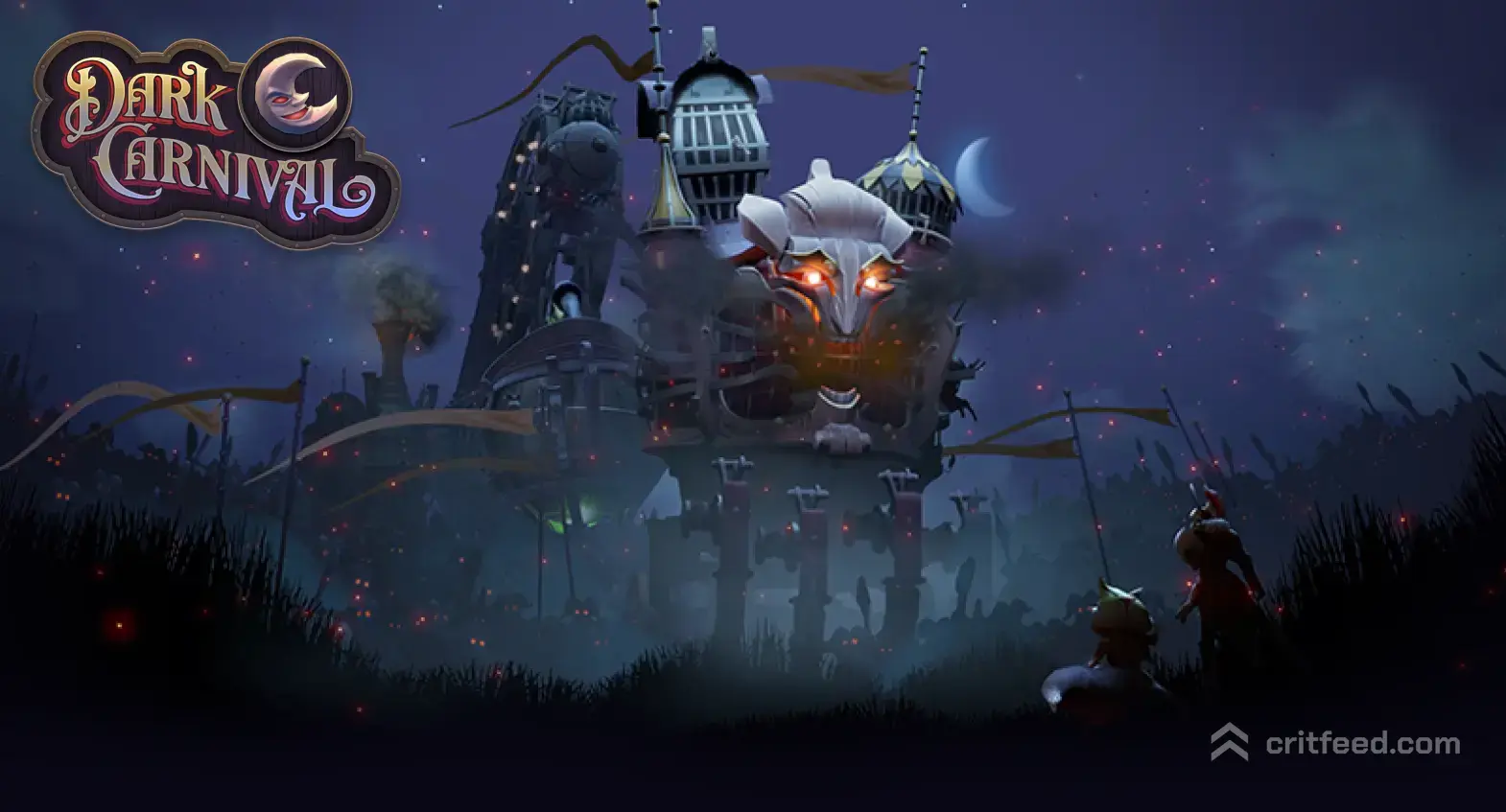
The Dark Carnival is Valve’s carnival-themed Dota 2 event that turns the usual grind into a sideshow of mini-games, cosmetics, and limited-time rewards. If you’re wondering what The Dark Carnival Dota 2 event actually contains, how to earn from it, and whether it’s worth jumping back in for, we’ve pulled together the essentials so you can make the call without wading through patch notes.
We’ll cover the event’s structure, its progression system, and the practical tips that make grinding it less painful. Because event details can change between phases, we’ve focused on how the systems work rather than any single build number — if a value isn’t confirmed in Valve’s own materials, we won’t invent one.
What Is The Dark Carnival in Dota 2?
The Dark Carnival is a themed in-game event on the official Dota 2 hub that layers a carnival aesthetic over the base game. It bundles a progression track, cosmetic rewards, and event-only activities into a single limited-time package.
Think of it as Valve leaning into the theatrical side of Dota — sinister ringmasters, tent-lit maps, and a reward loop designed to keep you queueing for a few extra weeks.
Unlike The International’s Battle Pass tradition, event hubs like this one tend to focus more on flavor and cosmetics than on prize-pool crowdfunding. That makes it lower-pressure for casual players but still meaningful for cosmetic collectors.
How the Event Structure Works
Valve’s carnival-style events generally share the same skeleton, and The Dark Carnival follows the pattern.
- A central event page on dota2.com houses the theme, rewards preview, and any store integration.
- A progression track (levels or points) unlocks cosmetics as you play matches or complete tasks.
- Timed phases may rotate mini-events, featured game modes, or new reward tiers.
- Store items — treasures, bundles, or immortals — often launch alongside the event.
The exact tier count, phase dates, and reward specifics live on Valve’s official page. We recommend checking the Dota 2 map guide if any event mode brings terrain changes, since carnival themes sometimes reskin lanes and jungle camps.
Earning Progression: What Actually Moves the Bar
Progression in event hubs typically comes from a mix of the following:
- Playing matches — All Pick, Turbo, and event modes usually count, with different multipliers.
- Winning matches — Wins almost always weigh more than losses.
- Daily or weekly quests — Short objectives that give the biggest per-minute return.
- Direct purchase — Level bundles are typically available in the store.
Turbo is usually the highest-efficiency mode for pure grinding, since you’re finishing games in 20–25 minutes rather than 45. If you care about MMR at the same time, ranked matches often carry bonus event points too — check the event page for the current multipliers.
Rewards: What You’re Actually Grinding For
Carnival-style events lean heavily into cosmetics. Expect a mix of:
- Hero sets with carnival, freakshow, or gothic-circus theming
- Couriers and wards that fit the event aesthetic
- Emoticons and chat wheel lines tied to the ringmaster narrative
- HUD skins or loading screens as higher-tier rewards
- Rare or ultra-rare drops at the top of the track
Rarity tiers matter here. The top-end cosmetics — Immortals and ultra-rare sets — hold value long after the event ends because they don’t return to the shop. If you’re a collector, that’s the pull.
For newer players trying to understand which heroes are worth investing cosmetics in long-term, our Dota 2 best heroes for beginners list is a good sanity check before spending real money on a set.
Should You Grind It? A Quick Cost-Benefit Table
| Player Type | Worth Grinding? | Why |
|---|---|---|
| Cosmetic collector | Yes | Event-exclusive items don’t come back |
| Ranked-only grinder | Optional | Play only if quests align with your ranked queue |
| Returning casual | Yes | Low-pressure way to relearn the game |
| Pro-scene follower | Skip | No competitive impact |
| New player | Maybe | Focus on fundamentals first, cosmetics second |
If you’re still learning the fundamentals, we’d rather see you working through our Dota 2 support guide or brushing up on Dota 2 warding spots than chasing event levels. The cosmetics will exist in your inventory forever; the ranked ladder resets its patience with you every game.
Tips to Grind The Dark Carnival Efficiently
Play in a party when possible. Party bonuses usually stack on top of event point gains, and the social layer keeps burnout down.
Prioritize quests first, then queue. A completed daily quest is worth many matches of passive point drip. Never queue without checking the quest list.
Pick heroes you actually know. Event quests sometimes ask for kills, assists, or last hits — none of which happen if you’re feeding on a hero you’ve never played. Our Dota 2 hero tier list can help you pick strong picks in the current meta.
Don’t force ranked if you’re tilting. Turbo counts toward most event objectives without touching your MMR. Use it.
Buy levels only for the top-tier items you actually want. Doing math on the store bundle versus your realistic play time will save you money.
The Dark Carnival vs. Battle Pass: What’s Different
The Battle Pass was Valve’s flagship monetization vehicle tied to The International. Carnival-style events serve a different purpose: shorter, lower-stakes, and not tied to a crowdfunded prize pool.
Key differences you’ll notice:
- No TI prize-pool tie-in — money spent doesn’t crowdfund the world championship
- Shorter duration — event hubs typically run for weeks, not months
- Narrower cosmetic scope — themed sets rather than a sprawling reward tree
- Lower grind ceiling — most players can realistically complete meaningful chunks
If you miss the old Battle Pass economy, you’re not alone — and IceFrog‘s design philosophy over the years has always leaned toward the game itself being the reward, with cosmetics as flavor rather than the main course.
The Bottom Line
The Dark Carnival is a themed cosmetic event, not a meta-shifting patch. It won’t change how you draft, ward, or itemize, but it does give returning and casual players a fresh reason to log in. If you’re a collector or a cosmetics fan, the exclusive rewards are the whole pitch.
Open questions worth checking on Valve’s official event page before you commit:
- Current phase and end date
- Exact point costs for each reward tier
- Whether featured modes or extra multipliers are live right now
- Store bundle pricing versus play-through cost
We’ll update this page as Valve publishes more concrete details or if the event structure shifts mid-run.
Final Thoughts
The Dark Carnival Dota 2 event is best treated as a side dish, not the main meal. Grind it if the cosmetics speak to you, skip it if you’re deep in ranked climb mode, and don’t overpay for levels you won’t finish. Either way, the base game is still the reason you’re here — and that’s the part that stays after the tents come down.
If you’re using this event as a soft return to the game, we’d point you toward our Dota 2 ranks guide and Dota 2 best settings to make sure you’re set up before you queue.