
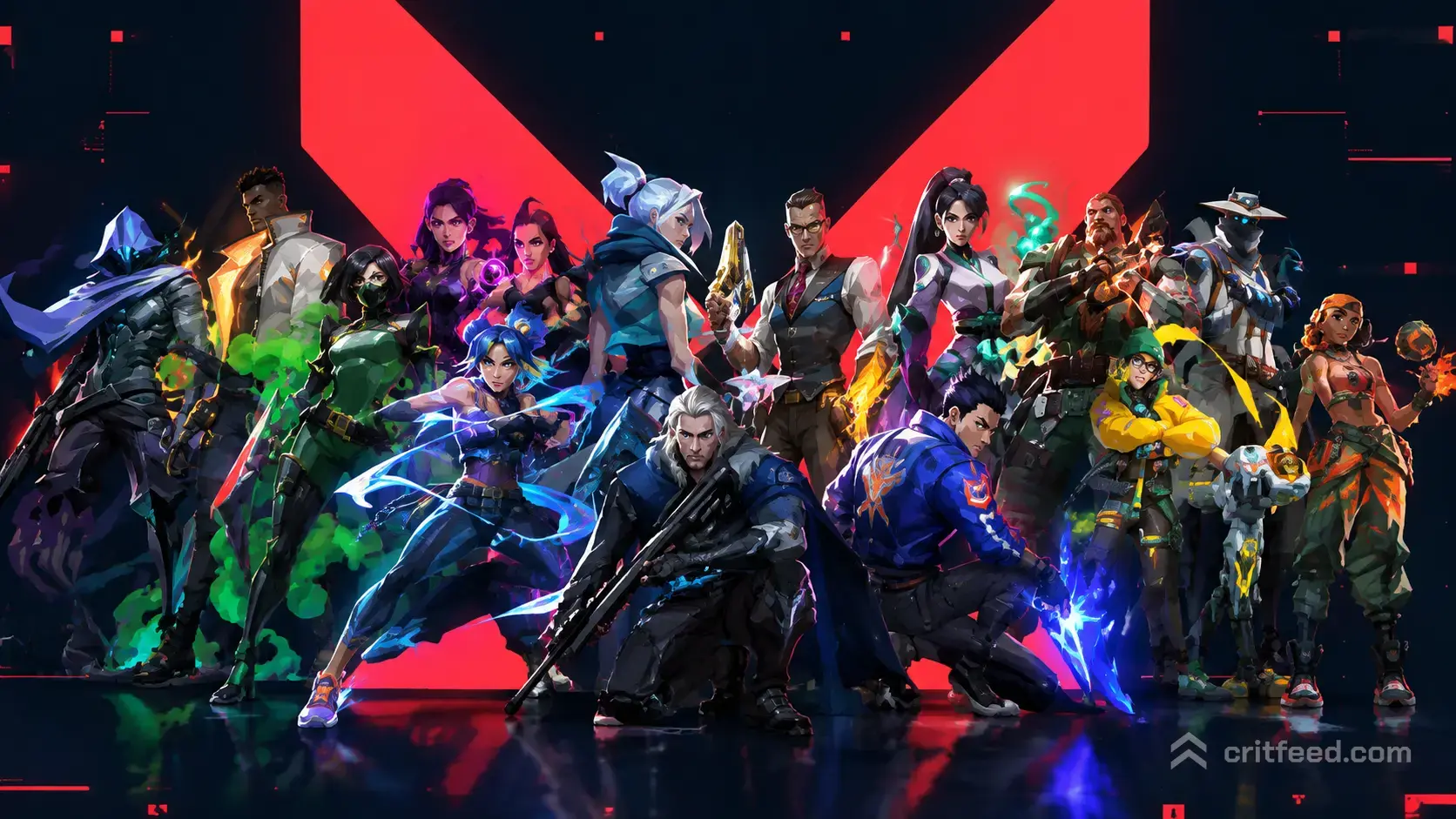
Understanding all Valorant agents is the fastest way to climb, because agent choice decides how your team takes space, holds sites, and closes rounds. In this guide, we break down every role in Valorant, how each agent fits into it, and the key questions you should ask before locking in.
Because Riot regularly ships new agents and reworks existing ones, we focus on the mechanics and principles that stay true across patches. For the latest tweaks to any specific agent, check the official valorant patch notes after each update.
The Four Agent Roles in Valorant
Every agent in Valorant belongs to one of four roles. Knowing what each role does is more important than memorizing ability names, because your job on the team changes completely depending on the role you lock.
| Role | Core Job | Team Impact |
|---|---|---|
| Duelist | Enter sites, get opening kills | Creates space and opens rounds |
| Initiator | Reveal enemies, disrupt setups | Sets up teammates to enter safely |
| Controller | Block vision with smokes | Cuts the map into winnable fights |
| Sentinel | Lock down flanks and hold sites | Protects information and the Spike |
A healthy team composition usually runs one Controller, one Sentinel, one or two Initiators, and one or two Duelists. Running two of the same role can work, but it means someone else’s job is going undone.
Duelists: The Entry Fraggers
Duelists are built to take fights first. If you love aim duels and want your kills to matter, this is your role.
- Jett relies on Updraft and Tailwind for aggressive vertical peeks, and her Blade Storm ultimate is one of the most reliable Operator alternatives in the game.
- Raze uses Blast Packs, Paint Shells, and Boom Bot to clear tight angles, with Showstopper as a close-range one-shot ultimate.
- Phoenix self-heals through his flames and can respawn on-site using Run It Back.
- Reyna snowballs off kills, using Devour to heal and Dismiss to reposition after a frag.
- Yoru teleports through walls with Gatecrash and turns invisible during Dimensional Drift, making him the flanking specialist.
- Neon sprints across the map and slides into fights, then locks down chokes with her electric wall. If she is your main, our neon valorant breakdown goes deeper on her kit.
- Iso builds a bullet-blocking shield off kills and pulls enemies into 1v1 duels inside his Kill Contract ultimate.
- Waylay is a newer entry Duelist built around mobility and slow zones that punish anyone caught in her path.
Pick a Duelist if you want to lead the charge and don’t mind trading your life for space.
Initiators: The Setup Artists
Initiators create the openings that Duelists cash in on. They scan, flash, and force enemies out of position.
- Sova fires Recon Bolts and Shock Bolts, and his Hunter’s Fury ultimate shoots wall-piercing energy through the map.
- Breach stuns through walls with Fault Line and Aftershock, and his Rolling Thunder ultimate quakes entire sites.
- Skye heals teammates, uses a controllable Guiding Light flash, and sends a Trailblazer to reveal defenders.
- KAY/O disables enemy abilities with his suppression knife and grenade, turning gunfights back into pure aim.
- Fade is the fear-themed counterpart to Sova, using Prowlers and Haunt to reveal and near-sight enemies.
- Gekko throws creature abilities that can be picked up and reused, including Mosh Pit and the Spike-planting Thrash ultimate.
- Tejo is a longer-range Initiator built around area-denial rockets and precise reveals.
Pick an Initiator if you like enabling teammates and reading enemy positions before the first bullet flies.
Controllers: The Map Shapers
Controllers block sightlines with smokes so your team can move through the map safely. Every serious composition needs one.
- Brimstone drops three precise smokes from a map interface, plus an Incendiary molly and Stim Beacon.
- Omen teleports short and long distances, flashes with Paranoia, and places smokes anywhere on the map. Learn his lineups in our valorant omen guide.
- Viper uses toxic walls, a Poison Cloud orb, and Snake Bite mollies that make retakes brutal.
- Astra places star anchors around the map, then converts them into smokes, concussions, or pulls from anywhere.
- Harbor brings water-based cover that blocks vision and shields teammates from bullets on the way in.
- Clove is the first Controller who can smoke and revive themselves after dying, which changes how post-plants play out.
Pick a Controller if you want to call mid-round decisions and dictate where fights happen.
Sentinels: The Anchors
Sentinels are the defenders and flank-watchers. They plant traps, lock down angles, and give the team information without needing to peek.
- Sage slows attackers with Slow Orbs, heals teammates, revives dead ones, and drops a solid Barrier Orb to block pushes.
- Cypher wires the map with Trapwires, a Spycam, and Cyber Cages, and his Neural Theft ultimate reveals every living enemy.
- Killjoy locks down sites with a Turret, Alarmbot, Nanoswarm grenades, and her Lockdown ultimate that detains everyone in range.
- Chamber uses a teleport anchor, a trip that slows enemies, and two custom weapons: a headhunter pistol and the Tour de Force Operator-style ultimate.
- Deadlock stops rushes with a barrier mesh, sonic sensors, and a nanowire ultimate that cocoons a single target.
- Vyse is a Sentinel who traps guns and vision on-demand, making her strong on retakes and last-second holds.
Pick a Sentinel if you enjoy holding an angle for 90 seconds and clicking heads when someone finally shows.
How to Choose Your First Main
New players usually try every agent, panic, and end up not learning any of them. Here’s a cleaner approach:
- Pick one role that matches your play style. Aim-first players go Duelist. Team-first players go Initiator or Controller. Patient players go Sentinel.
- Learn one agent inside that role. Every ability, every cooldown, every credit cost.
- Add one flex agent per role. So you can fill when the team needs it.
If you are brand new to the game, pair this with our valorant beginners guide before jumping into ranked. And once you have the fundamentals, our valorant tips and tricks breakdown covers the small habits that separate Gold from Diamond.
Meta and Map Considerations
Agent picks aren’t just about personal preference. Some agents are stronger on specific maps because of the layout:
- Split rewards Sentinels and Controllers who can lock down its tight chokes. If you play it often, study our split valorant map guide.
- Bind favors flankers because there is no mid, so double Duelist comps often work.
- Icebox rewards vertical Duelists like Jett and Sage’s wall for site takes.
Because the map pool rotates and agents get balance changes, meta picks shift over time. We recommend checking the current patch before you commit to a permanent main.
Ranked Matchmaking and Agent Pools
You can’t play the same agent every match once you hit high Immortal or Radiant lobbies, because your team will need role coverage. Having at least one agent per role in your pool is the single biggest quality-of-life upgrade for climbing.
If you’re new to how ranked works, our guide on how does valorant matchmaking work explains rank rating, hidden MMR, and party restrictions.
The Bottom Line
Valorant’s roster is split across four roles, and mastering one agent per role beats spamming ten agents you barely understand. Start with the role that matches your play style, learn the fundamentals of a single agent, and expand from there.
Riot adds new agents on a regular cadence, so expect this list to grow. We update our agent coverage after every major patch, so bookmark Critfeed and check back when the next agent drops.