
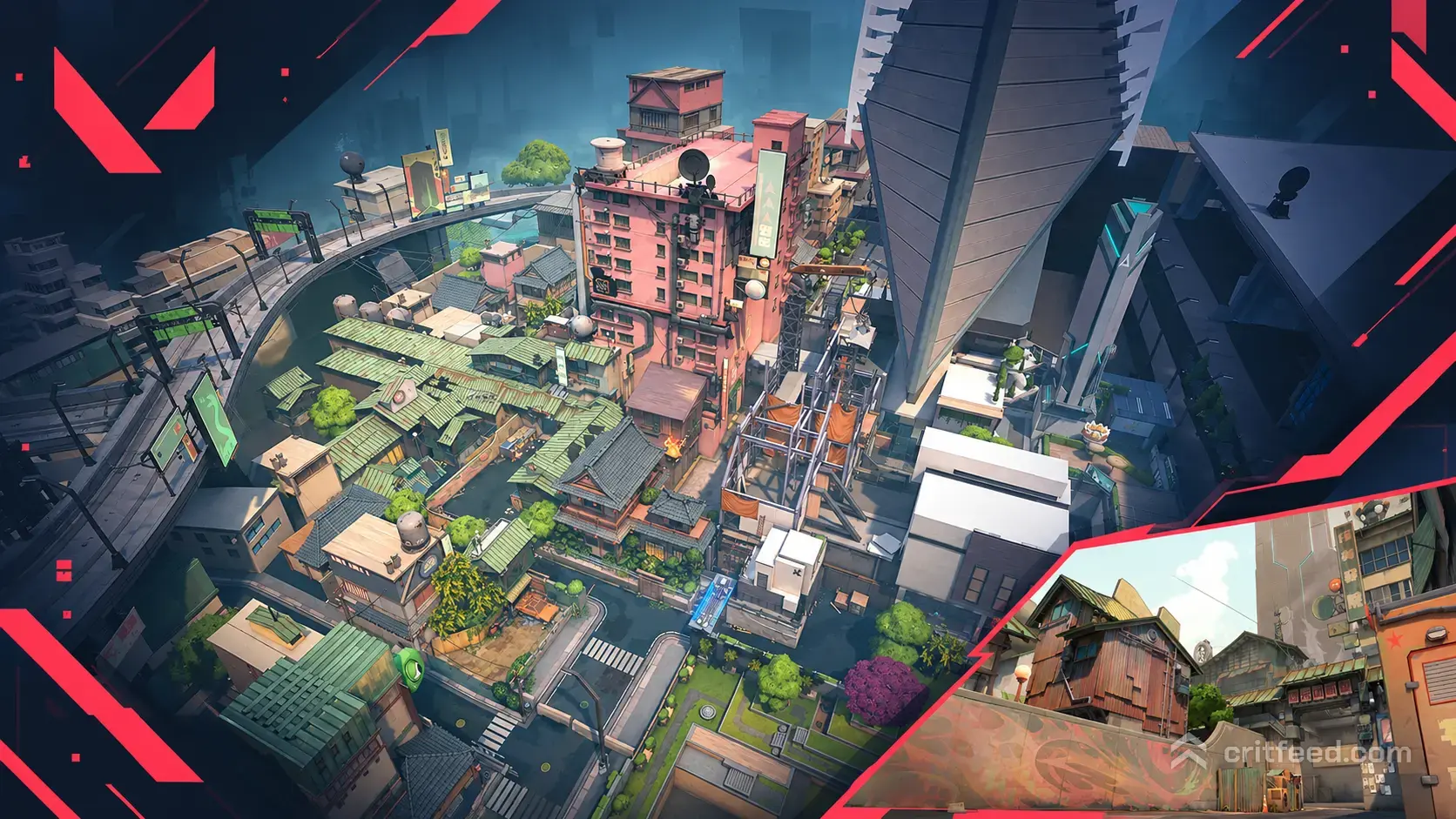
The Split map in Valorant is a two-site, vertical playground built around tight mid control, ropes, and choke points that reward disciplined utility. Whether you’re grinding Competitive or watching VCT, knowing Split’s layout is the difference between winning mid and getting collapsed on from three angles. This guide breaks down callouts, agent picks, and site strategy so you can attack and defend Split with a real plan.
Split at a Glance
Split is one of Valorant’s original maps and a classic two-site bomb defusal layout (A and B) connected by a heavily contested Mid. What makes it unique is verticality: rope ascenders let players reposition quickly to elevated angles on both sites, and Mid is essentially the map’s third lane.
Key facts about Split:
- Sites: A and B
- Ultimate Orbs: 2 one on A Site, one on B Site
- Ascenders (ropes): Multiple, including B Tower, Sewer, Vent A, and Vent Mid
- Signature feature: Train station atmosphere and dense vertical play
- Playstyle: Slow, methodical, utility-heavy
If you’re brand new to the game, our valorant beginners guide is a good primer before you dive into map-specific tactics.
Split Map Callouts
Clear callouts save rounds. Here are the essential spots you’ll hear called in comms.
A Site Callouts
- A Main Attacker entry into A
- A Ramps The elevated ramp area leading into site
- A Screens Common defender hold behind cover
- A Rafters / Heaven Elevated position overlooking site
- A Tower Deep defender angle above site
- A Back Site Rear plant area
B Site Callouts
- B Main / Alley Attacker approach to B
- B Garage The wide open area before site
- B Tower Elevated defender position (ascender access)
- B Back / Default Rear of site, common plant spot
- B Heaven High ground behind B Tower
Mid Callouts
- Mid Bottom Lower entry from attacker side
- Mid Vents Vent openings connecting to A and B
- Sewer Underground rotate between sites (ascenders here)
- Mid Mail Small room defenders often smoke
- Rafters Overhead cross above Mid
Best Agents for Split
Split rewards agents who can control tight chokes, clear vertical angles, and hold Mid. Comps typically lean into strong smokes, a lockdown Sentinel, and an Initiator who can flush corners.
| Role | Top Picks | Why They Work |
|---|---|---|
| Controller | Omen, Brimstone, Viper | Split’s chokes are perfect for one-way smokes and precise line-ups |
| Duelist | Raze, Jett, Neon | Verticality, satchels, and speed shine in tight lanes |
| Sentinel | Cypher, Killjoy, Sage | Trip-laden flanks and locked-down Mid win rounds |
| Initiator | Skye, Sova, Breach | Flushing Heaven, Screens, and Vents needs real info |
Two agents worth calling out specifically:
- neon valorant speed dashes turn Split’s long lanes into fast site takes, especially rushing B Alley.
- valorant omen smokes are arguably the best kit on Split his one-way smokes on Screens and Mid Mail are meta staples.
Attacking Split
Split punishes fast, thoughtless pushes. The map’s chokes are narrow, and defenders can trade almost anywhere. Patience and utility beat aim on Split.
Priority: Take Mid
Mid control is the single most important thing on Split. Winning Mid gives you:
- Access to both sites through Vents
- Ability to pinch B through Sewer ascenders
- Info denial on defender rotates
- Flank threat that forces defenders to play back
Smoke off Mid Mail and Rafters, flash into Mid Bottom, and clear Vent angles. Once Mid is yours, defenders are forced to overcommit somewhere.
Hitting A Site
A Site is compact and vertical. When you commit to A, you need to cover:
- A Rafters / Heaven (from Ramps)
- A Screens (common hold)
- A Tower (deep angle, needs a smoke)
A slow default with a lurker in Mid or B Alley works well. Post-plant, plant tight to Screens or default so your teammates can play Ramps and Rafters crossfire.
Hitting B Site
B Alley is a long, narrow lane an execute nightmare without utility. To open it:
- Smoke B Tower and B Heaven
- Flash over the boxes into site
- Use a Duelist entry with a trade behind them
- Watch the Sewer flank once planted
Fast B hits work if you can win the utility trade at Alley. Otherwise, default and take control of Sewer first.
Defending Split
Defenders on Split have huge structural advantages: high ground, tight chokes, and fast rotates through Sewer. Your job is to make attackers use utility, then rotate late.
Defending A Site
Play A with two aggressive utility angles:
- One player on A Screens or A Rafters
- A Sentinel with trips covering A Tower and A Ramps flank
- A Mid player pinching if attackers over-push Ramps
Post-round retakes are strong here because Heaven and Tower let you crossfire the plant.
Defending B Site
B defense relies on early info from B Alley and control of B Heaven.
- One defender holds B Tower with an ascender escape
- Another plays B Default or Garage behind cover
- A Sentinel locks Sewer with trips or turrets
If attackers rush B, delay with utility and rotate a Mid player through Sewer to trade.
Defending Mid
Never leave Mid empty. A Sentinel setup with Cypher trips or Killjoy turrets in Vents is standard. An aggressive Operator play from Mid Bottom can single-handedly deny an attacker Mid take.
Utility Line-Ups and Setups
Split’s chokes make it a line-up-heavy map. Common must-know spots include:
- Viper wall across Mid from spawn
- Omen one-way on A Screens
- Sova Recon Bolt from A Main clearing Rafters and Screens
- Brimstone molly for post-plant B default
- Killjoy Lockdown placed in A Back Site for a full-site clear ult
For more general improvement ideas, check our valorant tips and tricks for habits that translate to every map, not just Split.
Common Mistakes to Avoid
Even Diamond and Ascendant players make these errors on Split:
- Rushing B Alley without smokes you get traded every time
- Ignoring Sewer flanks post-plant on A
- Peeking Mid Bottom naked a full Operator angle from Vents will punish you
- Over-rotating off Mid and leaving Vents uncovered
- Planting default on B when your team is playing Tower plant for your setup, not from habit
The Bottom Line
Split is a utility-first, control-first map. Attackers who take Mid and use full smokes to hit sites will find success; defenders who hold vertical angles and rotate through Sewer will strangle sloppy pushes. If you play Split like Bind or Ascent, you’ll lose the ropes and chokes demand a slower, more coordinated game.
For patch-specific changes to Split or its map pool status in Competitive and VCT queues, we recommend checking the latest valorant patch notes directly, since map pools rotate regularly.
Ready to climb? Lock in a smokes agent, learn one Mid line-up, and start winning rounds you used to lose.