
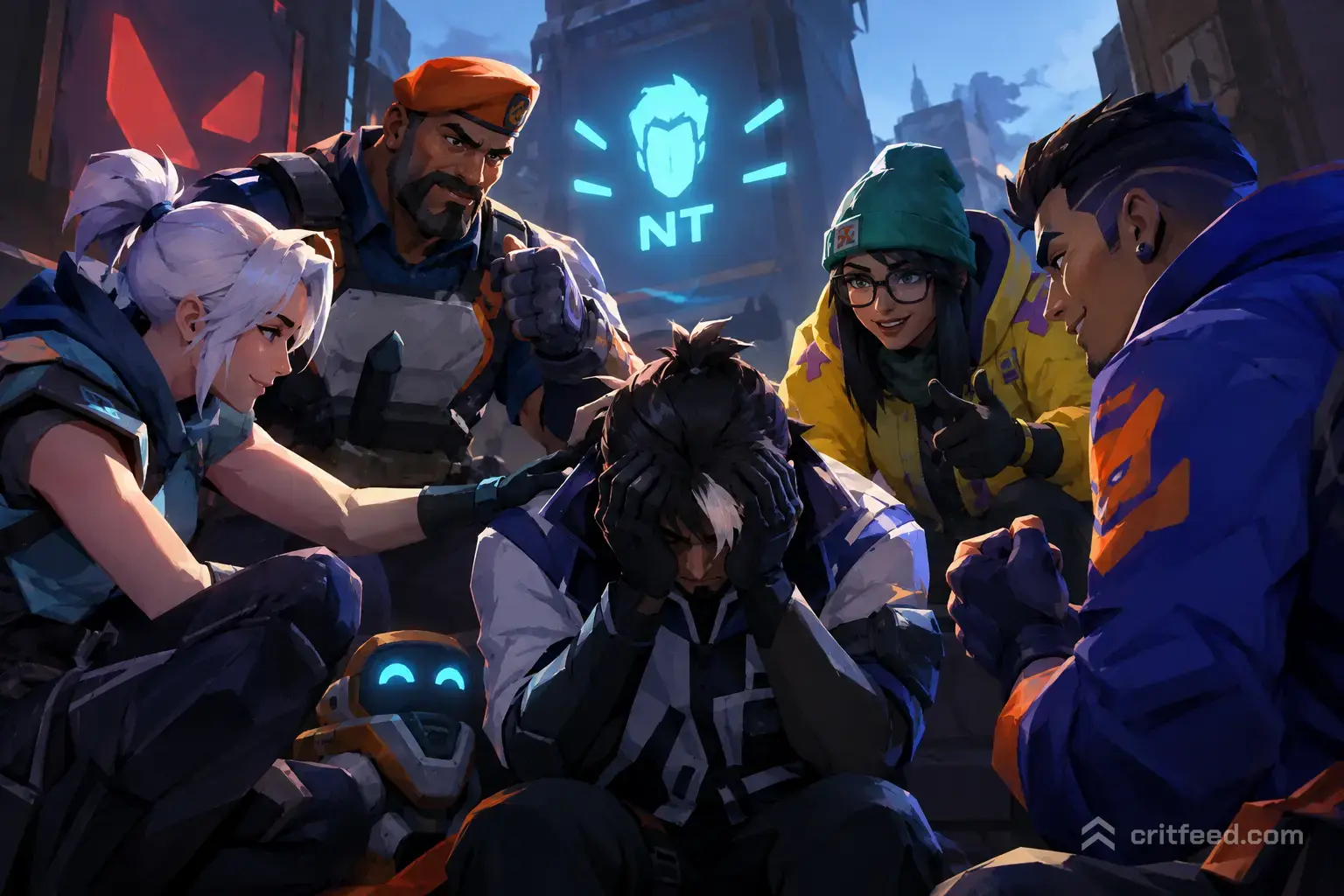
What Does NT Mean in Valorant?
You’ll see “NT” pop up in Valorant chat dozens of times per match, but what does NT mean exactly? NT stands for “nice try”, and it’s one of the most common phrases used to acknowledge teammates’ efforts after a close round or clutch attempt that didn’t quite work out.
Understanding when and how to use NT properly makes you a better teammate and helps maintain positive team morale through tough matches.
NT: Nice Try Explained
NT is shorthand for “nice try.” Players type it in team chat after someone makes a valiant effort but falls short of winning the round.
The phrase serves multiple purposes in Valorant’s team-based environment. It acknowledges good plays, keeps morale up after losses, and signals to your teammate that you recognized their effort even when the round didn’t go your way.
You’ll typically see NT after clutch attempts, failed defuses, or any situation where a player made strong individual plays but couldn’t secure the round win.
When Players Use NT
After Clutch Attempts
The most common use case is when a teammate attempts a 1v2 or higher clutch situation. Even if they get one or two eliminations before dying, an NT recognizes they did their best in an unfavorable situation.
For example, your Jett goes into a 1v3 on Haven C site, gets two frags, plants the Spike, but loses the final duel. That’s prime NT territory.
During Close Rounds
NT appears frequently after time-expired defuses or when someone nearly secures a crucial elimination. If your teammate starts defusing with 7.5 seconds left but gets swung on at 7 seconds, that narrow failure earns an NT.
The same applies to duels where someone gets the enemy extremely low but trades unfavorably. Calling out the damage and adding an NT shows you’re paying attention to their contribution.
When Someone Makes a Smart Play That Fails
Sometimes tactical decisions don’t work out. A well-timed flank that gets spotted, a creative off-angle that the enemy pre-fires, or a bold Spike plant attempt that falls just short all deserve recognition.
NT tells that player their idea was sound even if execution or luck didn’t favor them. This distinction matters because you want teammates to keep making proactive plays rather than playing scared after setbacks.
Why NT Matters for Team Communication
Maintaining positive communication helps teams perform better across long competitive sessions. When you’re grinding through ranked matchmaking, mental state directly impacts aim, decision-making, and coordination.
Builds Team Morale
Losing rounds feels bad. Losing clutch rounds where you almost pulled off something incredible feels worse. A quick NT from teammates softens that blow and keeps frustration from building into tilt.
New players especially benefit from this reinforcement. If someone is still learning Valorant’s fundamentals and attempting difficult plays, acknowledging their efforts encourages improvement rather than risk-averse play.
Prevents Tilt and Blame
Teams that don’t use NT or similar positive phrases tend to develop blame cultures. When someone fails a clutch and gets silence or criticism, they’re more likely to play passive or mute comms entirely.
NT creates a buffer against toxicity. It’s much harder for negativity to escalate when the default team response to failure is acknowledgment rather than blame.
Keeps Focus on the Next Round
A well-timed NT serves as a mental reset button. It acknowledges what just happened, validates the effort, and implicitly says “shake it off, next round.”
This matters because dwelling on lost rounds costs you future rounds. The faster your team processes a loss and refocuses, the better your comeback potential.
How to Use NT Effectively
Timing
Type NT immediately after the round ends while the failed play is fresh. Waiting until mid-buy phase or next round makes it feel like an afterthought.
Keep it short. “NT” or “nt nice try man” works perfectly. Don’t write paragraphs explaining what went wrong unless someone specifically asks for feedback.
Combine with Callouts
When appropriate, pair NT with useful information:
- “NT, you had him 40 HP”
- “NT, they were stacked site”
- “NT, unlucky timing”
This combination validates the effort while providing context that helps your teammate understand what happened. They learn without feeling criticized.
Don’t Overuse It
NT loses meaning if you spam it after every death or minor mistake. Reserve it for genuine efforts worth acknowledging.
Using NT after someone whiffs an easy shot or makes an obvious misplay comes across as sarcastic. Save it for situations where someone actually tried something difficult or made reasonable decisions that didn’t work out.
Use Voice When Possible
While typing NT works fine, saying it over voice comms feels more genuine and takes less time. A quick “nice try dude” keeps the match flowing while still providing that morale boost.
Voice also lets you add tone that text can’t convey. The same “NT” can read as genuine or sarcastic depending on context, but your voice makes intent clear.
Other Common Valorant Communication Phrases
NT exists within a broader ecosystem of quick communication phrases that help teams coordinate efficiently.
GG and WP
GG (good game) appears at match end, while WP (well played) acknowledges good rounds during the match. These serve similar morale functions as NT but apply to different situations.
NS and GJ
NS (nice shot) and GJ (good job) celebrate successful plays rather than failed attempts. Use these liberally when teammates hit clean headshots, land perfect utility, or make smart rotations.
MB
MB (my bad) is the self-directed version of NT. When you make a mistake, a quick MB acknowledges it without requiring teammates to address it. This keeps comms clean and shows accountability.
Economic Callouts
Communication extends beyond encouragement into tactical shorthand. Terms like eco, half-buy, and full buy coordinate spending without lengthy explanations. Each new act maintains these core communication fundamentals even as metas shift.
Regional and Cultural Differences
NT usage varies slightly across regions, though the core meaning stays consistent.
North American servers tend to use NT frequently and casually. You’ll see it multiple times per match in higher ranks where players understand its team-building value.
European servers use NT similarly but often mix in regional language variations. Don’t be surprised to see “mb” (misplay) or other abbreviations depending on which languages dominate your lobby.
Asian servers sometimes favor different phrases entirely, though English abbreviations like NT still appear regularly due to Valorant’s global player base.
The important point: NT transcends language barriers because it’s short, simple, and universally understood across the Valorant community.
When NT Can Backfire
While generally positive, NT occasionally reads wrong depending on context and timing.
Sarcastic Usage
Typing NT after someone makes an obviously bad play or wasn’t really trying turns it into mockery. If your Sage walls off the team in spawn and you hit them with “NT,” that’s clearly sarcastic.
Avoid using NT in situations where no genuine effort occurred. It damages the phrase’s value and makes you look toxic.
Overuse in Low-Skill Situations
If someone consistently fails basic plays, constant NTs can feel patronizing rather than encouraging. There’s a difference between acknowledging a difficult failed clutch and praising someone every time they lose a standard duel.
Save NT for situations where someone pushed their skill ceiling, not routine gameplay that didn’t work out.
Building Better Team Habits
NT represents just one piece of positive communication, but it exemplifies principles that improve any team’s coordination.
Focus on acknowledging effort over results. Teammates remember how you respond to their mistakes more than how you celebrate their successes. Creating an environment where people feel safe attempting difficult plays unlocks higher team potential.
Communicate constantly but concisely. Short phrases like NT, NS, and GJ maintain morale without cluttering voice comms during crucial moments. Longer strategy discussions belong in pre-round or post-round segments.
Lead by example. If you want teammates to stay positive, be the first person typing NT after failed clutches. Team culture flows from whoever sets the tone earliest and most consistently.
These habits compound over time. Players who communicate positively climb ranks faster because they’re easier to play with, build better chemistry with random teammates, and avoid mental booms that tank performance.
Conclusion
What does NT mean in Valorant? It’s a simple “nice try” that carries significant weight for team morale and communication. Use it to acknowledge failed clutches, close rounds, and smart plays that didn’t work out. Keep it genuine, time it right after the round ends, and watch how it helps maintain positive team energy through tough matches.
Master small communication habits like NT alongside your mechanical skill, and you’ll notice improved team coordination and fewer toxic interactions in your competitive grind.