
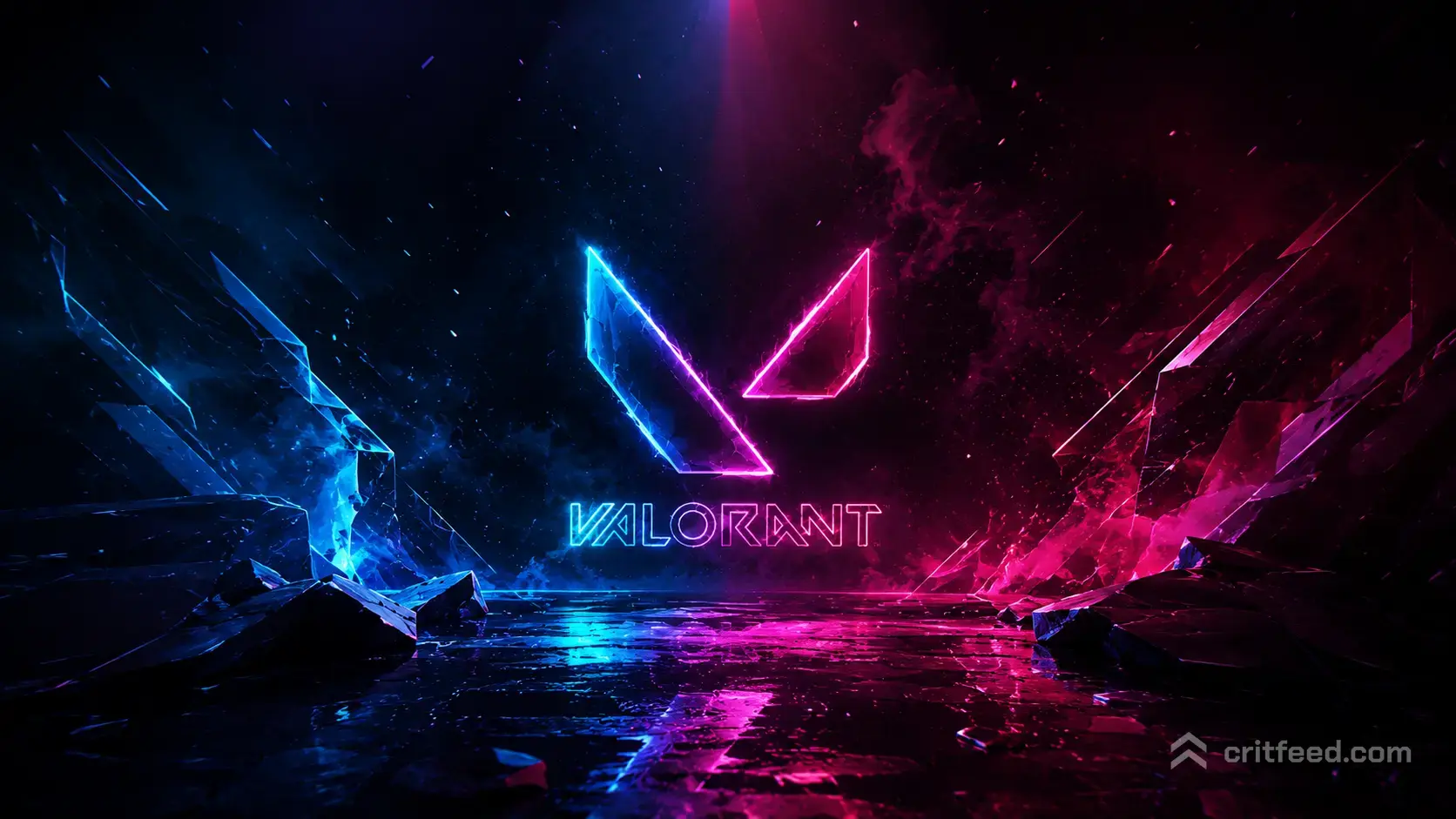
The VALORANT official logo is one of the most recognizable marks in tactical FPS gaming a sharp, angular “V” that shows up on every match loading screen, esports broadcast, and agent select. Whether you’re building a fan edit, streaming overlay, or team crest, understanding the logo’s design and where to source it legally matters. Here’s the complete breakdown of the mark, its meaning, and how to use it without stepping on Riot Games’ brand guidelines.
What the VALORANT Official Logo Looks Like
The VALORANT logo is a stylized “V” formed by two angular strokes that meet at a sharp point, paired with the “VALORANT” wordmark set in a custom uppercase sans-serif typeface. The mark is intentionally minimal no gradients, no ornaments, just clean geometry.
The design language mirrors the game itself: precise, aggressive, and built for split-second recognition. You’ll see it in three main configurations:
- The V-mark alone used as an app icon, favicon, and in-game
- The horizontal lockup V-mark next to the “VALORANT” wordmark
- The stacked lockup V-mark above the wordmark, common on merch and posters
The Colors: Riot’s Signature VALORANT Palette
The VALORANT brand palette is built around red, off-white, and dark navy, and the logo is almost always shown in one of those three tones depending on the background.
| Color | Common Use | Approximate Hex |
|---|---|---|
| VALORANT Red | Primary logo color, key art | #FF4655 |
| Off-White / Cream | Logo on dark backgrounds | #ECE8E1 |
| Dark Navy / Ink | Logo on light backgrounds | #0F1923 |
That specific shade of red sometimes called “VALORANT Red” by the community is one of the most cloned colors in fan art and team branding. It’s warm, saturated, and reads clearly even at small sizes on a scoreboard.
What the Logo Means
Riot has never published a lore-heavy backstory for the mark, and we won’t invent one. What we can say with confidence is what the design communicates:
- The angular V suggests speed, precision, and a bullet trajectory matching a game where headshots decide rounds.
- The negative space inside the V gives the mark room to breathe on any background, from a dark loading screen to a bright tournament stage.
- The uppercase wordmark signals authority and permanence, which fits a title Riot has positioned as a long-term competitive platform.
If you’re new to the game and want to understand why the branding leans so heavily on tactical precision, our valorant beginners guide walks through the core loop the logo represents.
Where to Find the Official Logo Files
The only fully legitimate source for the VALORANT official logo is Riot Games. Unofficial “logo pack” downloads on random asset sites often ship low-resolution PNGs, stretched vectors, or outdated versions of the mark.
For press, media, and creator use, Riot maintains a press page at riotgames.com/en/press, which is the correct starting point for brand assets tied to their titles, including VALORANT. Content creators enrolled in Riot’s creator programs may also get access to approved asset kits through official partner channels.
File formats you’ll typically want:
- SVG for web, streaming overlays, and anything that needs to scale
- PNG with transparent background for thumbnails and quick edits
- EPS/AI for print, merch, and high-quality design work
Using the VALORANT Logo: What’s Allowed
This is where a lot of creators trip up. The VALORANT logo is a trademark owned by Riot Games, not a free community asset. Riot has historically been reasonably permissive with fan use, but there are hard lines.
Generally Acceptable (Non-Commercial Fan Use)
- Personal fan art and wallpapers
- Non-monetized YouTube thumbnails and stream overlays for VALORANT content
- Community tournament graphics that don’t imply Riot endorsement
- Discord server icons and personal social profiles for VALORANT communities
Not Acceptable Without Permission
- Selling merchandise with the logo (shirts, mousepads, stickers)
- Using the mark in a way that suggests official Riot partnership when none exists
- Modifying the logo recoloring, stretching, adding effects, or merging it with other brands
- Using it as your own team, business, or product logo
When in doubt, check Riot’s “Legal Jibber Jabber” policy on their site. It’s the plain-English version of what creators can and can’t do with their IP.
Common Mistakes to Avoid
We see the same errors over and over in community edits. Skip these and your work will look instantly more professional:
- Stretching the logo to fit a banner always scale proportionally.
- Using a low-res PNG when a vector exists. Blurry logos read as low-effort.
- Placing the red logo on a similar-red background contrast is the whole point.
- Adding drop shadows, outlines, or gradients the mark is designed to stand on its own.
- Mixing the current logo with older Riot logo styles inconsistent branding hurts credibility.
For creators building content around the game, our roundup of valorant tips and tricks is a solid companion piece to pair with logo-forward thumbnails.
Logo History and Evolution
The VALORANT logo you see today has been remarkably consistent since the game’s reveal. Unlike some Riot titles that have gone through visual overhauls, the V-mark introduced around launch has stayed structurally the same. For the full context on when the game arrived and how the branding has held up over time, see our valorant launch date breakdown.
Minor refinements have appeared on esports broadcasts and in seasonal key art, but the core V-mark and wordmark remain untouched a rare thing in modern game branding, and a sign Riot got the design right the first time.
The Bottom Line
The VALORANT official logo is a sharp red “V” and matching wordmark owned by Riot Games, distributed through their press and creator channels, and protected by trademark. Fan and non-commercial use is generally tolerated; commercial use, modification, or anything implying an official partnership requires permission.
If you need the actual files, go directly to Riot’s press page rather than a third-party download site you’ll get a clean, current version of the mark and avoid any legal headaches down the line.