
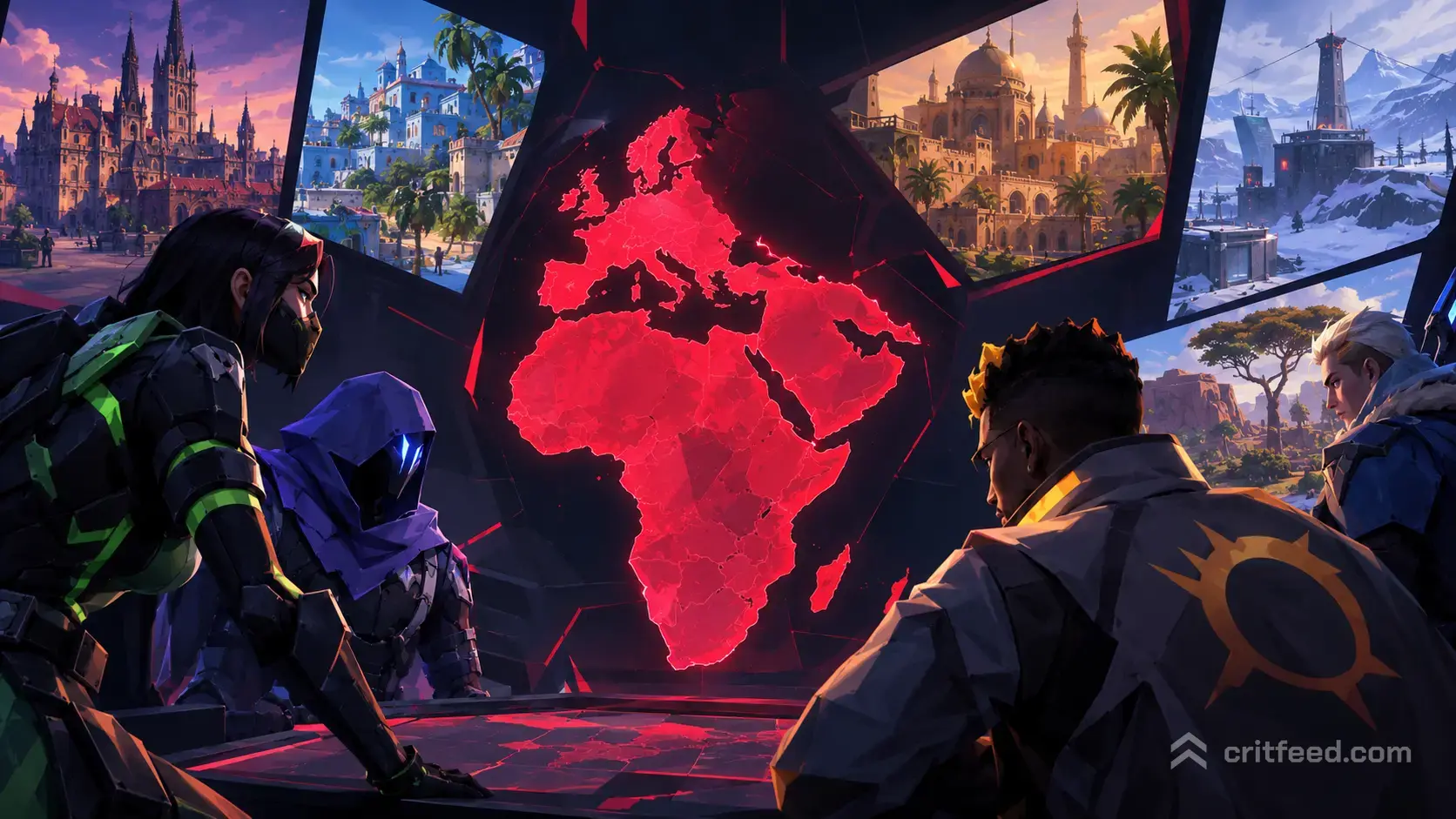
What Does EMEA Stand For in Valorant?
If you have ever watched a VCT broadcast and wondered what does EMEA stand for, the answer is simple: Europe, the Middle East, and Africa. It is one of the three main international leagues in Valorant esports, alongside the Americas and Pacific. In this guide, we break down the region, the teams, and why EMEA matters for anyone following competitive Valorant.
What Does EMEA Stand For?
EMEA stands for Europe, the Middle East, and Africa. It is a geographic grouping used across business, politics, and esports to combine three regions into one competitive bloc.
In Valorant, Riot Games uses EMEA as the label for one of its three international VCT (Valorant Champions Tour) leagues. The other two are VCT Americas and VCT Pacific, with VCT China running as a separate partnered league.
The EMEA region is huge. It covers everything from the United Kingdom and Germany to Turkey, Saudi Arabia, and South Africa. That makes it one of the most diverse competitive scenes in all of esports.
Why Riot Grouped These Regions Together
Before the current franchised system, Europe had its own competitive circuit called EU Masters and later VCT EMEA Challengers. The Middle East and parts of North Africa competed in a region often called CIS or had their own smaller circuits.
When Riot restructured Valorant esports into three international leagues, grouping Europe with the Middle East and Africa made sense for a few reasons:
- Shared time zones make live broadcasts and matches easier to schedule
- Overlapping player pools already existed in European tier-two scenes
- Server infrastructure in Europe already supported players from the Middle East and parts of Africa
- A single league creates stronger storylines and more compelling matches
The result is a league that pulls talent from dozens of countries into one unified competition.
The VCT EMEA League Structure
VCT EMEA is a partnered league, meaning Riot selected a fixed set of organizations to compete long-term. These teams play a full season each year, with the top finishers earning spots at international events like Masters and Champions.
The season typically runs through a regular split followed by playoffs. Points and placements determine who represents EMEA at the global stage.
How Teams Qualify for International Events
- VCT EMEA Kickoff winners earn a spot at the first Masters of the year
- Regular split standings feed into the main playoff bracket
- Playoff finishers earn seeds at Masters and Champions based on their placement
- Ascension, a separate promotion tournament, lets Challengers teams earn a temporary spot in the partnered league
This structure gives both top teams and rising Challengers squads a path to the biggest stages.
Countries Represented in VCT EMEA
The sheer range of countries in EMEA is what makes it stand out. Players and organizations come from across three continents.
| Sub-region | Example Countries |
|---|---|
| Western Europe | United Kingdom, France, Germany, Spain, Netherlands, Portugal |
| Northern Europe | Sweden, Finland, Denmark, Norway, Iceland |
| Southern Europe | Italy, Greece |
| Eastern Europe | Poland, Czech Republic, Ukraine, Russia |
| Middle East | Turkey, Saudi Arabia, UAE, Israel |
| Africa | Morocco, Tunisia, South Africa |
Turkey in particular has become a major talent pipeline, producing some of the most beloved players in the entire scene.
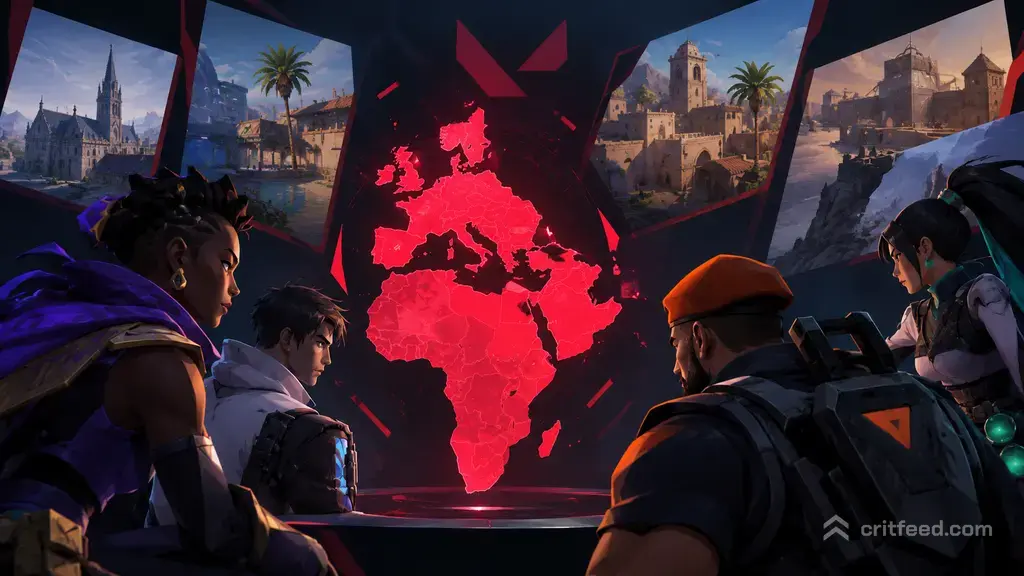
Partnered Teams in VCT EMEA
The partnered organizations in VCT EMEA include some of the biggest names in global esports. The list has shifted slightly since the league launched, but the core roster of franchises includes:
- Fnatic
- Team Liquid
- Team Heretics
- FUT Esports
- KOI
- Karmine Corp
- BBL Esports
- Natus Vincere (NAVI)
- Gentle Mates (M8)
- Team Vitality
- GIANTX
- Apeks
Rosters shift between seasons, so we recommend checking the official VCT EMEA standings for the current lineups before any big tournament. Our Valorant tips and tricks guide can help you understand the mechanics these pros rely on at the highest level.
Why EMEA Matters in Global Valorant
EMEA has produced some of the most dominant teams in Valorant history. Fnatic won back-to-back international Masters events in the early years of the circuit, and the region consistently sends multiple squads deep into Champions brackets.
The region is known for a few trademark playstyles:
- Methodical, utility-heavy executes that squeeze every drop out of agent kits
- Strong duelist talent across Turkey, France, and the Nordics
- Deep IGL pools that make team identities feel distinct
If you want to understand how competitive Valorant evolves, EMEA matches are a great place to watch new strats appear first. Pair that with knowing how Valorant matchmaking works and you can see the gap between ranked and pro-level play more clearly.
EMEA vs. the Other VCT Leagues
Here is how EMEA compares to the other international Valorant leagues at a glance:
| League | Region Covered | Base Location |
|---|---|---|
| VCT EMEA | Europe, Middle East, Africa | Berlin, Germany |
| VCT Americas | North and South America | Los Angeles, USA |
| VCT Pacific | East Asia, SEA, Oceania, South Asia | Seoul, South Korea |
| VCT China | China | Shanghai, China |
Each league plays its regular season in one hub city, which keeps travel costs down and makes it easier for teams to practice between matches.
VCT Challengers: The Tier Below EMEA
Not every team in Europe, the Middle East, or Africa plays in the partnered league. VCT Challengers EMEA is the tier-two circuit, split into multiple national or regional leagues such as:
- Challengers France (Revolution)
- Challengers Northern Europe (Polaris)
- Challengers Spain (Rising)
- Challengers Turkey (Birlik)
- Challengers DACH (Evolution) covering Germany, Austria and Switzerland
- Challengers MENA (Resilience) covering the Middle East and North Africa
Top Challengers teams compete in EMEA Ascension, where the winner earns a two-year promotion to the partnered league. That is how newer squads can break into VCT EMEA without being hand-picked.
Common Questions About EMEA
Is EMEA just a Valorant term?
No. EMEA is a general business and geographic term used by many companies, from tech giants to car manufacturers. Riot borrowed it because it already described the region accurately.
Why isn’t Russia in a separate region?
Russia and other CIS countries were historically folded into European competitive circuits. When Riot built VCT EMEA, those players stayed in the European talent pool rather than getting their own league.
Does EMEA include all of Africa?
Technically yes, but in practice most of the African talent and infrastructure in VCT comes from North Africa (Morocco, Tunisia) and South Africa. Server availability and population density shape where teams actually form. If you are curious about broader platform access, our guide on whether Valorant has crossplay covers how players connect across devices.
Where does EMEA play its home events?
The main VCT EMEA league is based out of Berlin, Germany, where Riot operates a dedicated studio for the regional season. Playoffs and finals sometimes move to larger arenas in cities like Istanbul, Madrid or London.
How to Watch VCT EMEA
If you want to follow the league, you have a few options:
- Official Riot broadcasts on Twitch and YouTube in multiple languages
- Co-streams from popular Valorant creators and former pros
- VLR.gg for schedules, scores and stat tracking between matches
Watching pros is one of the fastest ways to improve. If you are new to the game, start with our Valorant beginners guide and then pay attention to how EMEA teams use utility on each map.
The Bottom Line
EMEA stands for Europe, the Middle East, and Africa, and in Valorant it is the name of one of the three major international VCT leagues. It covers dozens of countries, hosts some of the most successful organizations in the game, and runs through a partnered league plus a Challengers system that feeds new teams in through Ascension.
If you want to go deeper into the game that fuels this entire scene, check out our full list of all Valorant agents to learn the kits these pros build their strats around. Understanding EMEA is just the start of understanding competitive Valorant.