
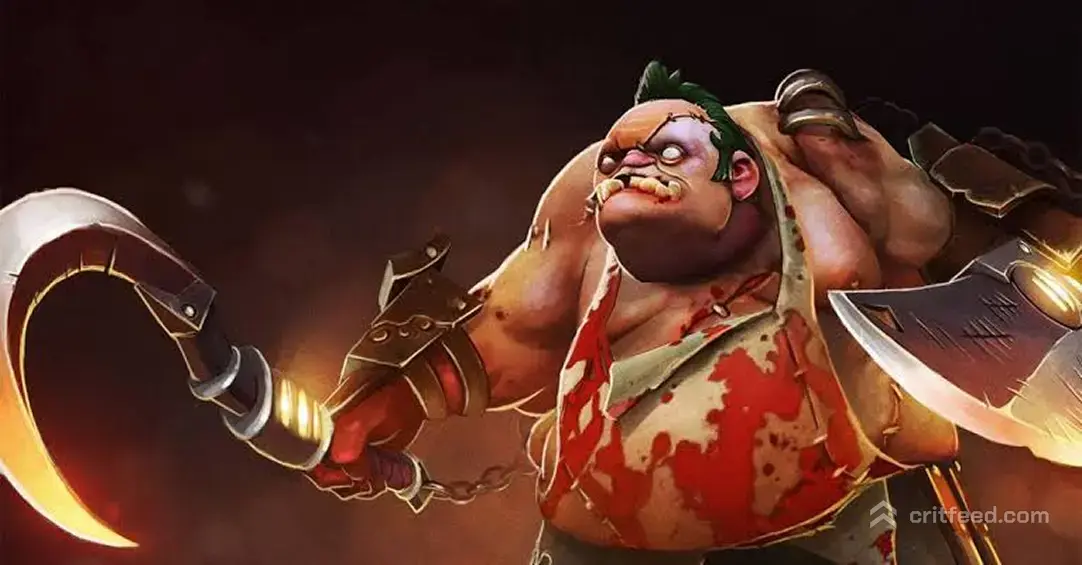
Pudge Guide: Why the Butcher Dominates Dota 2 in Game
Pudge remains one of Dota 2’s most iconic and consistently picked heroes, and for good reason. The Butcher combines game-changing initiation with unmatched tankiness and percentage-based damage that scales infinitely. Whether you’re learning the hero for the first time or refining your hook accuracy, understanding why Pudge works and how to maximize his strengths will elevate your impact across all MMR brackets.
Why Pudge Became a Dota 2 Icon
Pudge’s legendary status in Dota 2 traces back to one of the most famous moments in competitive history. During The International, Dendi from Team NAVI exploited a hook interaction that allowed him to pull enemies through terrain in ways that seemed impossible at the time. His mechanical mastery and creative abuse of this mechanic helped NAVI secure their TI victory and cemented Pudge as the hero that defined outplay potential.
That legacy continues today. Pudge sits among the most-picked heroes in both casual and ranked play because his kit rewards skill expression while remaining accessible to newer players learning the fundamentals.
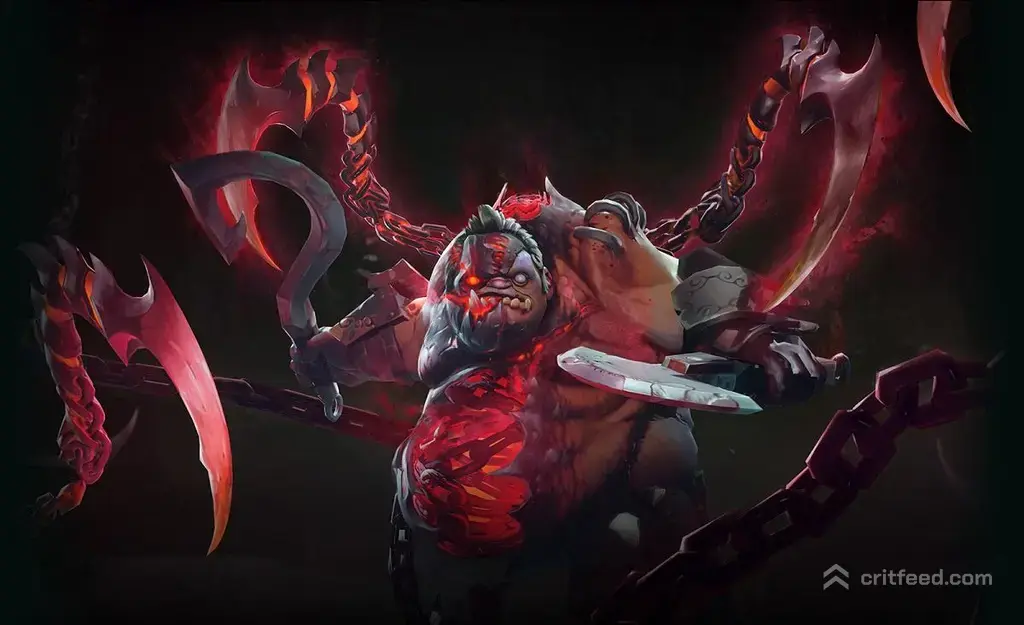
Understanding Pudge’s Role and Positions
Pudge functions primarily as a position 4 roaming support or position 5 hard support in the current meta. His ability to secure kills from fog of war makes him exceptional at creating space for cores during the laning phase and mid-game transitions.
Core strengths as a support:
- Hook provides guaranteed initiation when landed, bypassing the need for Blink Dagger early
- Rot offers constant harass and waveclear without mana cost
- Flesh Heap scaling turns him into a frontline tank as the game progresses
- Dismember goes through spell immunity with Aghanim’s Scepter, making him relevant into the late game
While mid Pudge exists in niche situations, support Pudge maximizes his impact without requiring farm priority. Your job is to create kills for your team, not to farm efficiently.
Meat Hook: The Ability That Defines the Hero
Meat Hook is what separates good Pudge players from great ones. The 1300 range pure damage nuke doubles as a displacement tool that instantly wins fights when you land it on the right target.
Hook mechanics to master:
- Cast point is 0.3 seconds, giving opponents a brief window to dodge
- Hook travels at 1600 speed, meaning max-range hooks take roughly 0.8 seconds to reach the target
- Fog of war hooks are unreactable when executed properly
- Hook pulls the target to your location when cast, not where you stand when it connects
- Trees and most terrain block hook, but cliffs do not
The most reliable hooks come from positions where enemies cannot see you casting. Stand in tree lines, use Smoke of Deceit, or wait behind your team’s frontline before throwing hooks into the backline. Predictive hooks beat reactionary hooks every time.
Flesh Heap: Why Pudge Counters Strength Carries
Flesh Heap is what transforms Pudge from a one-dimensional hook bot into the best anti-tank support in Dota 2. The ability drains enemy health based on their maximum HP, making it devastatingly effective against strength heroes who stack health items.
Against heroes like Centaur Warrunner, Axe, Primal Beast, or any carry building Heart of Tarrasque, Flesh Heap’s percentage-based damage cuts through their HP pool faster than most nukes. Combined with Dismember’s additional HP removal, Pudge melts tanky frontliners that other supports struggle to threaten.
Each nearby enemy death also grants permanent Flesh Heap stacks, adding strength that scales your HP pool throughout the match. By the 30-minute mark, a support Pudge often has more health than the enemy position 1 carry simply from passive stacking.
Essential Itemization for Support Pudge
Pudge’s item builds revolve around increasing his survivability, improving hook reliability, and amplifying his disable duration. Unlike cores who need damage items, support Pudge wants utility and tank stats.
Early Game (0-15 minutes)
| Item | Purpose |
|---|---|
| Tranquil Boots | Sustain Rot harassment without burning through consumables |
| Wind Lace | Positioning tool for landing hooks and closing Dismember distance |
| Magic Stick/Wand | Essential burst HP recovery given Rot’s self-damage |
| Smoke of Deceit | Enables fog hooks and proactive roaming |
Mid Game (15-30 minutes)
| Item | Purpose |
|---|---|
| Blink Dagger | Guarantees Dismember on priority targets without relying on hook |
| Aether Lens | Increases hook range to 1550 and Dismember cast range to 350 |
| Force Staff | Saves allies hooked by enemy Pudge or caught out of position |
Late Game (30+ minutes)
| Item | Purpose |
|---|---|
| Aghanim’s Scepter | Makes Dismember pierce spell immunity and reduces cooldown |
| Black King Bar | Lets you channel Dismember without interruption in teamfights |
| Blade Mail | Punishes enemy cores who focus you during hook engagements |
Aether Lens deserves special mention. The range extension turns already long-distance hooks into cross-screen picks that opponents cannot anticipate. Combined with proper fog positioning, an Aether Lens Pudge controls areas of the map that enemies assume are safe.
Playing Pudge as Position 4 and 5
Your positioning priorities change depending on whether you’re the position 4 or 5 support, though both roles share core responsibilities.
Position 4 Pudge (Roaming Support)
Start with Rot and immediately leave your safe lane to pressure mid or offlane. Your goal is to secure kills on overextended enemies before they hit level 3-4 power spikes. Once you have Hook at level 2, coordinate dives with your offlaner or midlaner.
Between rotations, stack neutral camps for your cores and maintain vision in enemy jungle. Hook picks on isolated farmers create the space your team needs to take objectives.
Position 5 Pudge (Hard Support)
Stay in lane with your carry until you hit level 2-3, then begin rotating to secure runes and threaten the enemy mid. Your carry should be safe to farm solo by the time you reach level 3, especially if you’ve pressured the enemy offlaner out of lane with Rot harass.
Prioritize buying Observer Wards, Sentry Wards, and Dust of Appearance. Your networth will be lower than a position 4, so focus on cheap utility items like Wind Lace and Magic Wand before saving for Blink Dagger.
Hook Training and Accuracy Drills
Hook accuracy improves through pattern recognition, not random practice. Study how enemies move during specific game states.
Predictable movement patterns to exploit:
- Retreating enemies move in straight lines toward their base or nearest tower
- Supports standing behind their core rarely juke when focused on denying or harassing
- Heroes channeling or turning to cast telegraph their position for 0.3-0.5 seconds
- Enemies walking toward rune spawns at X:50 on the clock commit to predictable paths
Practice landing hooks on heroes crossing river choke points, contesting runes, or rotating between lanes. These scenarios repeat every match and offer the highest success rate for new Pudge players.
Countering Pudge and Playing Around Enemy Pudge
When facing enemy Pudge, your goal is to eliminate his fog advantage and punish his positioning mistakes.
Effective counter strategies:
- Maintain aggressive Observer Ward coverage in trees near lane and jungle paths
- Pick heroes with mobility spells like Anti-Mage, Queen of Pain, or Puck who can escape hooks
- Draft tanky frontliners to absorb hooks meant for your backline
- Buy Lotus Orb to reflect Dismember back onto Pudge
- Secure Dota 2 conduct summary protection by avoiding toxic responses when hooked repeatedly
Heroes like Oracle, Abaddon, and Shadow Demon directly counter Pudge’s kill threat by saving hooked allies before Dismember channels finish.
Advanced Pudge Techniques for High-Level Play
Once you’ve mastered basic hook accuracy and positioning, these advanced techniques separate immortal-level Pudge players from the rest.
Blink-Hook-Dismember Combo
Buffer your hook cast immediately after Blink Dagger, then queue Dismember while hook is traveling. This guarantees the full combo lands before enemies can react with defensive items or spells. The execution window is approximately 0.4 seconds.
Rot Slow Stacking
Rot’s slow increases over time while the ability remains active. Toggle Rot on early during chases to maximize the slow effect, even if you’re not yet in damage range. The slow reaches full effectiveness after 1 second.
Hook During Dismember
With Aghanim’s Scepter, you can cast Hook while channeling Dismember. Hook a second enemy into melee range, then immediately Dismember them after the first channel ends. This technique turns solo picks into double kills during mid-game skirmishes.
Why Pudge Remains Relevant in the Pro Scene
Professional teams value Pudge for his ability to create uneven fights through picks. A single successful hook on the enemy position 1 or 2 before objectives forces 4v5 engagements that win games.
Pudge’s popularity in ranked matchmaking also stems from his low mechanical barrier to entry. New players learning support fundamentals can contribute immediately with basic hook accuracy, while veteran players never stop finding new angles and timing windows to master.
The hero scales purely through player skill. No amount of farm or items replaces landing the right hook at the right time. That skill expression keeps Pudge feeling rewarding across thousands of matches.
Optimizing Your Pudge Gameplay in 2026
Pudge succeeds when you maximize his strengths while covering his weaknesses. Hook accuracy matters, but game sense and positioning win more matches than mechanical skill alone.
Focus on these priorities every match:
- Secure early kills to accelerate your Blink Dagger timing
- Stack Flesh Heap aggressively by participating in every skirmish
- Ward aggressively near enemy jungle and farm patterns
- Communicate hook attempts to your team before throwing them
- Save Dismember for targets who threaten your cores, not the nearest enemy
Review your replays specifically for missed hook opportunities and poor positioning choices. Every death as Pudge represents a potential hook you weren’t alive to throw.
Pudge’s Place in the Current Meta
The Dota 2 hero tier list consistently ranks Pudge among the most-picked heroes across all brackets. His versatility, pick potential, and teamfight impact make him viable in nearly every draft composition.
For players working through the Dota 2 best heroes for beginners list, Pudge offers an excellent introduction to support play while teaching fundamental mechanics like positioning, vision control, and target prioritization.
Even with occasional Dota 2 patch 7.41e bugs affecting certain hero interactions, Pudge remains stable and functional across all recent updates.
Master the Butcher and Climb MMR
Pudge rewards players who invest time into understanding enemy movement patterns and map control. His hook defines fights, his tankiness absorbs damage meant for carries, and his percentage-based HP drain deletes strength heroes that other supports cannot threaten.
Start with the basics: land predictable hooks, maintain vision, and survive teamfights. As your game sense improves, your hook accuracy will follow naturally. The hero that helped define competitive Dota 2 through Icefrog‘s careful balancing remains one of the most satisfying and impactful supports you can master.